
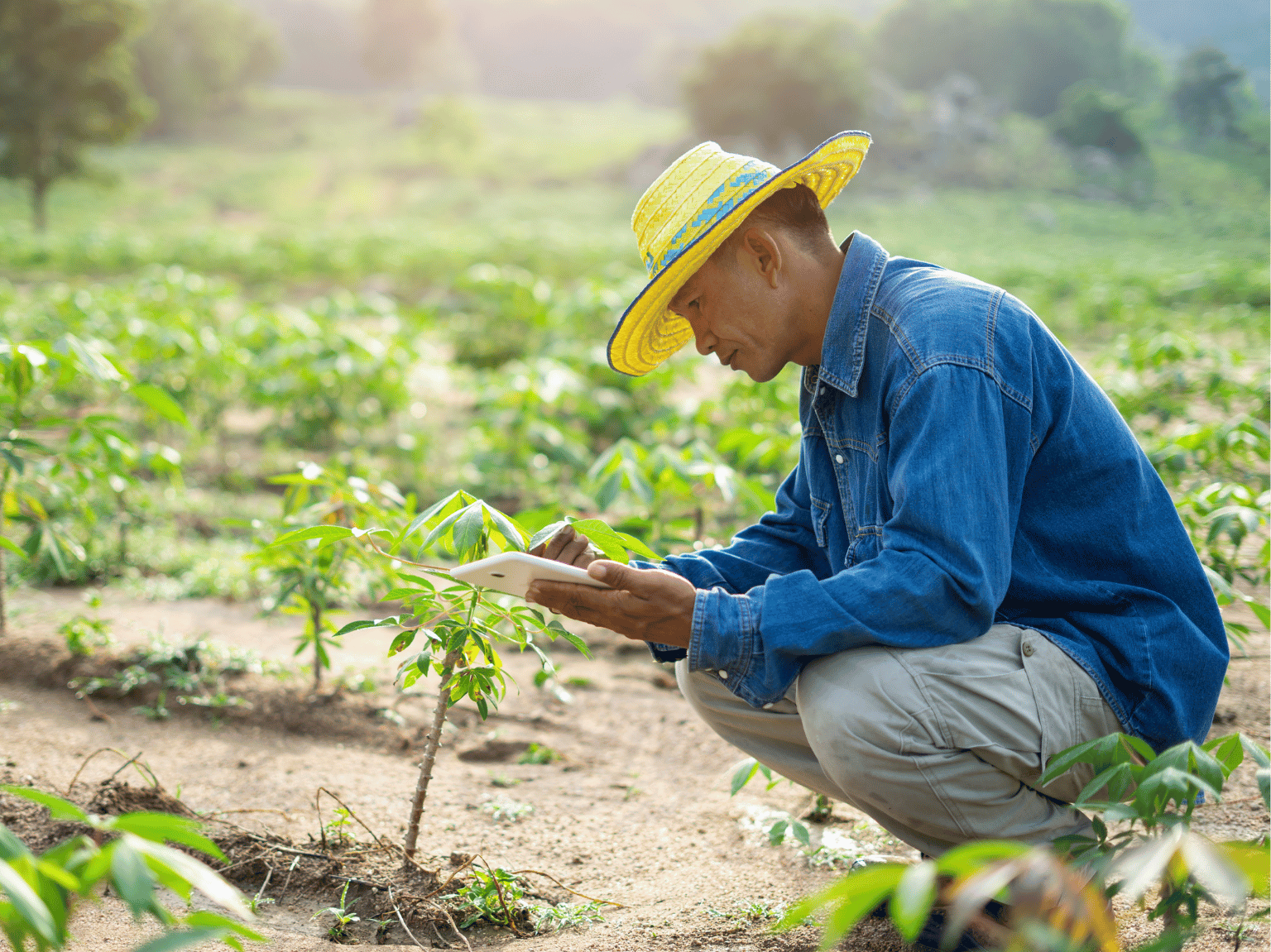
OpenAI Foundation Backs Effort to Bring AI-Powered Weather Services to Millions of Farmers

AIM for Scale is part of a new $60 million initiative supported by the OpenAI Foundation to expand access to AI-powered weather and crop disease forecasting for 100 million smallholder farmers across South and Southeast Asia and East Africa over the next three years. Through the University of Notre Dame’s Keough School of Global Affairs, AIM for Scale will receive approximately $10 million to support its role in the initiative.
The broader consortium brings together AIM for Scale, the University of Chicago, the University of California, Berkeley, Precision Development (PxD), Digital Green, and CIMMYT, combining expertise in AI-based weather forecasting, digital advisory services, and crop disease prediction.
For AIM for Scale, the investment supports an opportunity at the heart of its mission: how to move from successful pilots to services that governments can sustain and deliver to millions of farmers. It builds on support from the International Affairs Office of the UAE Presidential Court and the Gates Foundation, which has enabled governments across Asia and Africa to reach millions of farmers with digital advisory services.
“Artificial intelligence is creating extraordinary new possibilities for farmers, but innovation alone is not enough,” noted Paul Winters, Executive Director of AIM for Scale. “The real opportunity is ensuring that these tools become part of systems that can sustainably reach millions of farmers based in low- and middle-income countries. This catalytic funding will help governments translate rapid advances in AI into services that farmers can rely on year after year.”
From better forecasts to services at scale
Smallholder farmers grow a third of the world’s food, yet many lack access to timely, localized information to guide decisions about planting, harvesting, and protecting their crops. Dry spells, extreme weather events, and disease outbreaks can threaten an entire season’s production and the livelihoods that depend on it.
Advances in AI are creating new opportunities to improve both the quality and availability of this information. AI weather models can generate accurate forecasts using substantially less computing power than traditional forecasting systems, while AI-enabled tools can help deliver forecasts and actionable advice through text messages, calls, chatbots, and other channels.
The new funding will allow AIM for Scale to work with governments and multilateral development banks to scale these technical advances with the partnerships, technical assistance, and financing needed to reach millions of farmers.
Different partners will bring complementary expertise to that effort. The University of Chicago and UC Berkeley will work with national meteorological agencies on testing and operationalizing AI weather models. Precision Development will help governments translate forecasts into practical advice delivered through trusted channels. Digital Green will integrate improved forecasts into FarmerChat and use farmer feedback to inform forecasting teams.
A portion of AIM for Scale’s $10 million grant will also be sub-granted to CIMMYT to advance AI-enabled crop disease forecasting, including the use of AI and NASA Earth-observation data to identify potential wheat pathogen outbreaks earlier.
“Achieving food security in Indonesia requires a transformation of our agri-food systems based on our eco-region toward one that is more healthy, resilient, sustainable, and supported by technology and innovation,” said Dr. Jarot Indarto, Director of Food and Agriculture at the National Development Planning Agency of the Republic of Indonesia (Bappenas). “AI-powered weather forecasting offers an important opportunity to strengthen evidence-based policymaking while providing farmers with real time and actionable information to anticipate climate risks. Indonesia’s agriculture has experienced climate-related impacts, including floods and droughts. With most farmers being smallholders holding less than 0.5 hectares, localized weather forecasts can help them take preventive measures, reducing production risks, and improving productivity. This partnership represents an important step toward ensuring that technological innovation delivers tangible benefits for policymakers and farmers, and strengthens the resilience of Indonesia’s agri-food systems.”
“Smallholder farmers have some of the most to gain from better weather and crop disease forecasts, and often the least room for error when those threats hit,” said Anna Makanju, Head of AI for Civil Society & Philanthropy at OpenAI Foundation. “AI can put better, more localized information in farmers’ hands earlier, giving them more time to make decisions that protect their crops and livelihoods. We’re investing in partners with the expertise and local relationships to make that possible for millions of farmers.”