
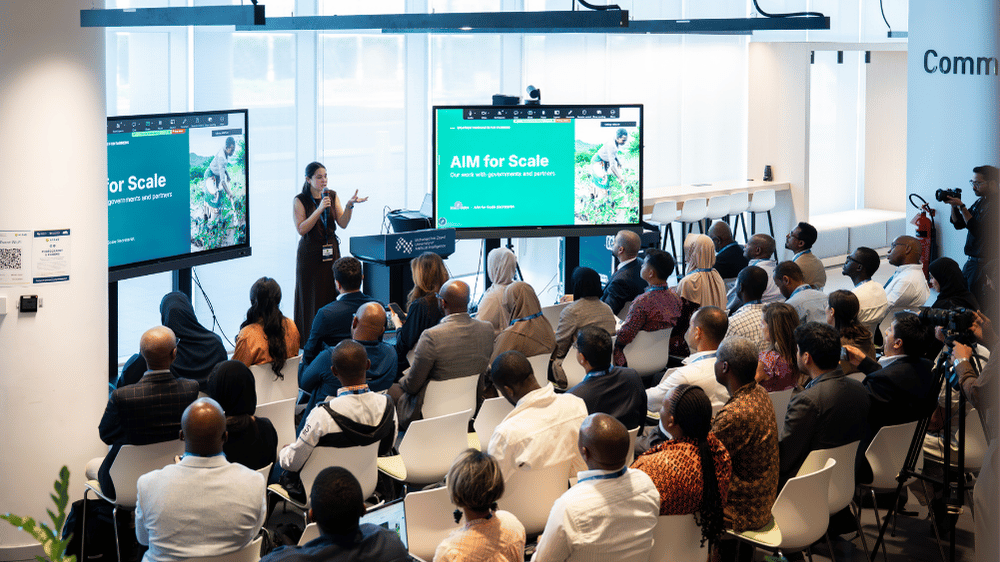
AIM for Scale and Partners Expand AI Weather Forecasting Training to Strengthen National Services for Farmers

Government officials from 15 countries gather in Abu Dhabi to build national capacity to harness AI-based weather forecasting and deliver actionable information to farmers across Africa, Asia, the Middle East, and Latin America.
ABU DHABI, UAE – November 12, 2026 – Advances in artificial intelligence (AI) are opening new possibilities for countries to leverage world-class weather forecasting systems, overcoming longstanding barriers related to cost and infrastructure. This week, government officials from 15 countries across Africa, Asia, the Middle East, and Latin America are gathering in Abu Dhabi, United Arab Emirates, at the Mohamed bin Zayed University of Artificial Intelligence and National Center for Meteorology to explore how they can harness these innovations to generate and deliver more accurate, timely, and actionable forecasts to farmers.
Building on a successful pilot launched in 2025 with five countries—Bangladesh, Chile, Ethiopia, Kenya, and Nigeria—the AI Weather Forecasting for Agriculture Training Program is expanding significantly in its second year. Representatives from Bolivia, Colombia, Indonesia, Pakistan, Peru, the Philippines, Rwanda, Senegal, Sierra Leone, and the United Arab Emirates (UAE) are joining representatives from the inaugural cohort. Taking place November 9 – 13 and bringing together representatives from national meteorological and hydrological services and ministries of agriculture, the five-day program will enable participants to independently evaluate and operationalize AI-based forecasting models, and translate forecasts into actionable information for farmers.
With the ambition of building capacity across 30 countries by 2028, the AI Weather Forecasting for Agriculture Training Program aims to empower national institutions to deliver forecasts that help farmers make better-informed agricultural decisions and investments, strengthening productivity and resilience to increasingly unpredictable weather.
Convened by the International Affairs Office at the Presidential Court of the UAE, the program is jointly organized by the Mohamed bin Zayed University of Artificial Intelligence (MBZUAI) and the University of Chicago, in collaboration with the Agricultural Innovation Mechanism for Scale (AIM for Scale) and the National Center for Meteorology (NCM). Precision Development (PxD) has played a key role in designing the program’s Agricultural Services Track curriculum, drawing on its expertise in helping governments deliver and scale actionable, evidence-based agricultural advisory services. The training program grew out of AIM for Scale’s Weather Forecasts for Farmers Innovation Package, which brings together partners to identify and coordinate the technical, financial, institutional, operational, and delivery conditions required to scale weather forecasts to effectively and sustainably reach hundreds of millions of farmers.
H.E. Dr. Abdulla Ahmed Al Mandous, Chairman of WMO and the National Center of Meteorology (NCM), said: “Artificial intelligence is transforming the future of weather forecasting, creating new opportunities to deliver more accurate, timely, and actionable information, particularly for sectors such as agriculture that are highly sensitive to weather and climate conditions. We are pleased to host this international training program at NCM, bringing together participants from different countries, alongside our own specialists, to exchange knowledge and explore the practical applications of AI in meteorology. This initiative reflects our commitment to advancing scientific collaboration, strengthening national and international capabilities, and supporting the development of innovative weather services that contribute to agricultural resilience and food security.”
Fatema AlMulla, Head of International Relations at the International Affairs Office, UAE Presidential Court, said: “For AI to make a lasting difference for farmers, government institutions need the tools and the expertise to put them to work. This program intends to equip officials with the skills to use AI weather forecasting and integrate it into their national meteorological and agricultural services. By connecting international expertise with world-leading AI capabilities and research here in the UAE, we are helping enable countries to turn these innovations into practical services that inform agricultural decisions.”
The training is part of a broader effort led by AIM for Scale, the University of Chicago, the University of California, Berkeley, PxD, Digital Green, and the International Maize and Wheat Improvement Center (CIMMYT), to help governments integrate AI-based weather forecasting into national systems and scale access to timely and actionable weather information for millions of farmers. This consortium of partners was recently awarded $60 million by the OpenAI Foundation to reach 100 million smallholder farmers with AI-based weather forecasts by 2030.
“AI is creating an extraordinary opportunity to transform how countries produce and deliver weather forecasts, but the real measure of success is what these advances mean for farmers,” said Paul Winters, Executive Director of AIM for Scale and the Keough-Hesburgh Professor of Sustainable Development at the University of Notre Dame’s Keough School of Global Affairs. “By ensuring that national institutions have the tools, expertise, and partnerships to harness these innovations, we can help more farmers have access to the timely, actionable information they need to make better decisions, improve productivity, and strengthen their livelihoods. Our ambition is to turn this technological breakthrough into lasting national capabilities and reach hundreds of millions of farmers.”
“AI can give low- to middle-income countries weather forecasts that meet the same gold standard as forecasts in countries with advanced economies,” says Katie Kowal, director of AI for Weather at the Data Science Institute and at the University of Chicago’s Human-Centered Weather Forecasts Initiative. “But accurate forecasts alone are not enough. They need to provide timely and useful information to the people who can act on them. We’re excited to be working with countries to help them build the tools and expertise needed to harness these opportunities for their people.”
These advances offer countries an unprecedented opportunity to strengthen their own forecasting capabilities, develop services tailored to local conditions, and reduce dependence on external forecast products. This is particularly important as climate variability, including the effects of the current El Niño, creates significant uncertainty for farmers. El Niño can disrupt seasonal rainfall patterns, increasing the risk of droughts and floods across many agricultural regions. But realizing the potential of AI forecasting requires more than access to new technology. National institutions must be equipped to independently evaluate AI models, determine which approaches work best in their contexts, and integrate them into operational systems.
Building national capacity from forecast production to farmer delivery
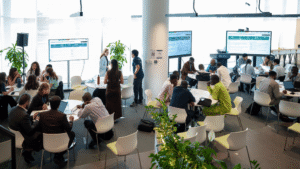
A central objective of the training is to strengthen collaboration between national meteorological services and ministries of agriculture, enabling countries to build integrated services that connect weather forecasting with agricultural decision-making.
The 2026 curriculum features two complementary tracks. The Meteorological Services Track provides hands-on experience running AI weather models, evaluating their accuracy against existing forecasting systems, and assessing their performance using local observational data. The Agricultural Services Track focuses on translating forecasts into actionable agricultural advice and identifying effective channels for reaching farmers.
Rather than following a one-size-fits-all approach, participating countries are working on priorities they have identified themselves, such as predicting the onset of rainy seasons, anticipating extreme temperatures, or improving short-term rainfall forecasts. Throughout the week, country teams are developing practical, country-specific pilot concepts that reflect their existing institutional systems, agricultural priorities, and available resources.
By the end of the program, each team is expected to have developed an initial roadmap for testing and integrating AI forecasting into national services, including the technical requirements, institutional responsibilities, and implementation steps needed to move forward.
Professor Souhaib Ben Taieb, Director of the M.Sc. and Ph.D. programs in Statistics and Data Science at MBZUAI said: “At MBZUAI, we are committed to advancing AI research that can address real-world challenges. Weather forecasting for agriculture is a clear example of how AI can make a meaningful difference by improving weather predictions and supporting more informed agricultural planning. Through this program, we are bringing our expertise in AI and data science to an area with significant potential for global impact.”
Building a global community to support country-led innovation
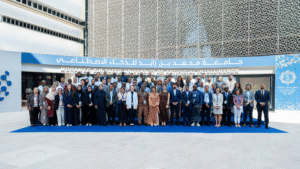
Beyond technical training, the program seeks to foster lasting partnerships between national institutions and a global network of researchers, technology providers, and development organizations to support the adoption and scaling of AI-based weather forecasting.
The training brings together experts from leading institutions, including the African Centre of Meteorological Applications for Development (ACMAD); AfriClimate AI; the Alliance of Bioversity International and CIAT; C4Impact; Digital Green; the Inter-American Development Bank (IDB); the International Fund for Agricultural Development (IFAD); Khalifa University; the Norwegian Refugee Council’s NORCAP ARCS Consortium; NVIDIA; PxD; the Stockholm Environment Institute; TomorrowNow; University of Oxford, Department of Physics; and the World Meteorological Organization (WMO), among others. Together, these partners contribute expertise spanning AI model development and evaluation, agricultural advisory services, and the practical challenges of integrating innovations into national systems.
To help participating countries continue applying what they learn, a community of practice will be launched following the training. Through this network, country teams will share priorities, identify opportunities for collaboration and peer learning, and explore how they can support one another in implementing AI-based weather forecasting within their national institutions. The community will provide a platform for continued technical exchange, allowing countries to share lessons, address common challenges, and build on one another’s experiences as they advance their implementation plans.
The program also ensures participating countries have access to the computing infrastructure required to sustainably generate AI-based forecasts. NVIDIA has donated 14 Dell Pro Max GB10 Workstations for participating government institutions, enabling national teams to continue running, testing, and evaluating AI weather forecasting models after returning home. By pairing technical expertise and international collaboration with dedicated computing resources, the initiative aims to help countries build capabilities that can be sustained and strengthened over time.