AIM For Scale

Asian Development Bank and UAE Sign Technical Cooperation Partnership to Facilitate ADB and AIM for Scale’s Collaboration in Scaling Innovations

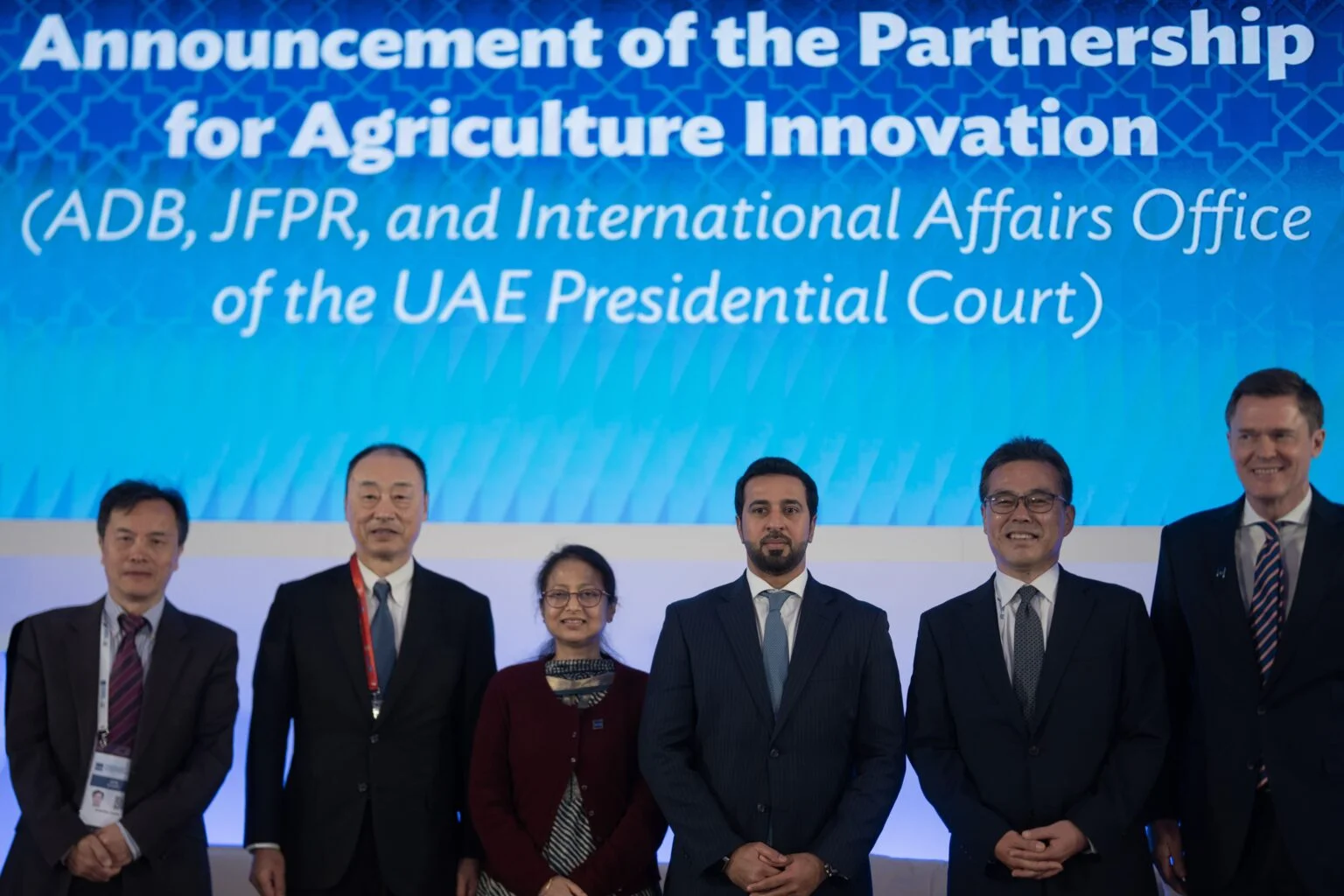
Six officials posing on stage

May 6, 2026 – This week on the sidelines of the ADB’s 59th Annual Meeting in Samarkand, Uzbekistan, the International Affairs Office at the UAE Presidential Court signed a US$1.5 million technical cooperation partnership with the Asian Development Bank (ADB) to scale agricultural innovations for farmers across eight countries in Asia and the Pacific. 

The new partnership will be operationalized by the ADB and AIM for Scale, building on a cooperation arrangement signed between both parties on March 19, 2026. It is part of a broader effort to align technical expertise, government leadership, and multilateral financing around scaling cost-effective agricultural solutions. The agreement is further strengthened by the support of the Japan’s Fund for Prosperous and Resilient Asia and the Pacific (JFPR).

Through this collaboration, AIM for Scale will work alongside ADB and government counterparts in Bangladesh, Indonesia, Nepal, the Philippines, Vietnam, Pakistan, Thailand, and the Maldives to translate evidence-backed innovations into investment-ready programs. These include weather forecasting for farmers, digital advisory services for agriculture, and livestock productivity solutions designed to improve farmer decision-making, productivity, and resilience.

AIM for Scale—supported by the UAE and the Gates Foundation—will provide technical expertise and coordination support to ensure these innovations are effectively embedded within ADB-financed operations and national delivery systems.

“International cooperation continues to play a key role in strengthening global food security,” said Advisor at the International Affairs Office of the UAE Presidential Court Khalfan Al Matrooshi. “Through Abu Dhabi’s AI Ecosystem for Global Agricultural Development, the UAE is convening the partners, expertise, and financing to make that possible. Today’s partnership is a testament to what international cooperation can deliver when global partners come together with shared purpose.”

By combining AIM for Scale’s evidence-first approach with ADB’s financing and country engagement, the partnership aims to close a persistent gap in agricultural development: ensuring that proven innovations reach farmers at the scale required to meaningfully improve livelihoods and food security.

Highlighting the importance of the collaboration, Qingfeng Zhang, Senior Director, Agriculture, Food, Nature, and Rural Development Sector Office at ADB, said: “Digital technologies, innovative financing, and improved fertilizer efficiency are critical to addressing the impact of recent shocks that have made millions more people go hungry, many of them in Asia and the Pacific. Collaborative agreements such as this one act as a catalyst towards integrated agricultural approaches – strengthening input systems, boosting productivity, and accelerating the transition towards more resilient, inclusive, and sustainable food systems”

Shigeo Shimizu, Executive Director representing Japan at the ADB Board of Directors, added: “Through the Japan Fund for Prosperous and Resilient Asia and the Pacific, Japan has been actively supporting initiatives that advance innovation, resilience, and digital transformation across the region. Our support for this initiative since 2024 reflects Japan’s strong and sustained commitment to promoting sustainable agriculture and strengthening food systems through innovation and partnership.”

“We look forward to collaborating with the ADB to ensure that millions of farmers across Asia and the Pacific have access to evidence-backed innovations that can meaningfully strengthen their livelihoods,” said Paul Winters, Executive Director of AIM for Scale. “We are grateful to the UAE and JFPR for enabling this important work.”

AIM for Scale Partners with Nigerian Meteorological Agency to Deliver AI-Powered Weather Forecasts to Farmers Across Nigeria

Man and woman sign documents at conference table

Abuja, Nigeria — April 14, 2026 — The Agricultural Innovation Mechanism for Scale (AIM for Scale) and the Nigerian Meteorological Agency (NiMet) have signed a memorandum of understanding (MoU) to strengthen the delivery of climate and weather information to farmers across Nigeria.

The partnership will focus on integrating AI-based weather forecasting and enhancing digital advisory systems – translating timely, accurate climate information into practical guidance that helps farmers make better decisions and reduce their exposure to climate-related risks.

Through this collaboration, NiMet and AIM for Scale–an initiative supported by the International Affairs Office at the UAE Presidential Court and the Gates Foundation–will leverage AI-driven forecasting to weather insights tailored to farmers’ needs. By translating these forecasts into actionable guidance, the partnership will support farmers in optimizing planting decisions, managing inputs more effectively, and mitigating the impacts of extreme weather, ultimately improving productivity and livelihoods.

NiMet plays a central role in Nigeria’s agricultural and climate information systems, providing early warning advisories, seasonal climate predictions, and digital climate services. This partnership builds on that foundation by integrating AI into forecasting systems, strengthening institutional capacity, and enhancing how information is communicated—expanding the reach and effectiveness of advisory services so more farmers receive timely, relevant information to support decision-making.

Nigeria was among the first cohort of countries to participate in the AI Weather Forecasting Training Program launched by AIM for Scale, Mohamed bin Zayed University of Artificial Intelligence (MBZUAI), and the University of Chicago in Abu Dhabi in September 2025. The program is designed to give countries in Africa, Asia, and Latin America the tools and autonomy to generate and deliver forecasts locally, ensuring these innovations reach farmers where they are most needed.

AIM for Scale is also partnering with the African Centre of Meteorological Applications for Development (ACMAD) to bring both in-country expertise to collaborations with NiMet and other meteorological services in the region. Together, they will support the integration of AI-based forecasting into national systems and build the capacity needed to sustain it over time.
The MoU also establishes a framework for joint activities, including technical collaboration, capacity building, coordinated outreach, and resource mobilization to support long-term implementation.

Prof. Charles Anosike, Director-General and Chief Executive Officer of NiMet, emphasized the importance of the partnership in advancing Nigeria’s weather and climate services to the benefit of farmers:
“Providing accurate and timely weather and climate information is essential for national development, food security, and disaster risk management. This collaboration with AIM for Scale will strengthen our ability to deliver actionable climate services to farmers and other stakeholders, while advancing innovation in forecasting through the integration of AI and data-driven tools.”

Paul Winters, Executive Director of AIM for Scale and Professor at University of Notre Dame’s Keough School of Global Affairs, highlighted the opportunity to translate innovation into large-scale impact:
“Farmers rely on weather to make some of their most important decisions. By working with NiMet to integrate AI-based forecasting into existing advisory channels, we can ensure that accurate, timely, and actionable information reaches millions of farmers. This partnership reflects a shared commitment to ensuring that evidence-backed solutions reach farmers in ways that meaningfully improve their livelihoods.”

AIM for Scale Partners with ADB to Accelerate Scaling of Agricultural Innovations across Asia and the Pacific

Two men behind desk shake hands and hold up documents. There are two men behind them on stage.

Manila, Philippines — March 19, 2026 — The Agricultural Innovation Mechanism for Scale (AIM for Scale) and the Asian Development Bank (ADB) today signed a memorandum of understanding to strengthen collaboration in scaling evidence-based agricultural innovations through ADB-financed programs across Asia and the Pacific.

For millions of farmers, access to timely information, productivity-enhancing solutions, and better services can significantly strengthen livelihoods. Yet too many promising agricultural innovations remain stuck in small pilots, reaching only a fraction of the farmers who could benefit. AIM for Scale–funded by the UAE’s International Affairs Office at the Presidential Court and the Gates Foundation–works to close this gap by identifying evidence-based, cost-effective innovations and assembling the technical expertise, partnerships, and catalytic resources needed to scale them. Through this cooperation, ADB brings its deep country engagement and financing capacity to translate these proven solutions into large-scale investments capable of reaching millions of farmers across Asia and the Pacific.

The agreement establishes a formal framework for cooperation between the two organizations, with the goal of helping governments integrate proven agricultural innovations into large-scale public investments and national development programs.

Under the arrangement, AIM for Scale and ADB will work together to scale high-impact agricultural solutions in areas including weather services for farmers, digital advisory services for agriculture, and innovations that improve livestock productivity, with the potential to expand collaboration into additional innovation areas in the future.

The agreement was signed during the Asia and the Pacific Food Systems Forum at ADB headquarters in Manila as part of a session focused on moving agricultural innovations from research and pilot programs into large-scale implementation.

“ADB is committed to supporting our member countries in transforming food systems and improving farmers’ livelihoods,” said Qingfeng Zhang, Senior Director, Agriculture, Food, Nature, and Rural Development Sector Office, in his opening remarks. “Working with AIM for Scale will help accelerate the adoption of proven innovations and strengthen pathways from research to large-scale investment.”

Nobel laureate Michael Kremer, who chairs AIM for Scale’s Advisory Panel and delivered the keynote address, highlighted the initiative’s focus on translating evidence into large-scale implementation. “AIM for Scale grew out of the work of the Innovation Commission for Climate Change, Food Security, and Agriculture, which identifies innovations with strong evidence of impact and cost-effectiveness. Together with AIM for Scale, we look forward to working closely with ADB to help bring these solutions to scale in the coming years in support of global food security.”

“Achieving meaningful improvements in farmers’ livelihoods requires moving beyond pilots to solutions that reach millions,” said Paul Winters, Executive Director of AIM for Scale. “ADB has long played a leading role in supporting large-scale agricultural transformation across Asia and the Pacific. By partnering with AIM for Scale, ADB is helping ensure that proven innovations are translated into major public investments capable of delivering impact for millions of farmers.”

The cooperation agreement builds on collaboration between the two organizations since 2024 and reflects a growing emphasis among governments and development partners on scaling innovations that deliver measurable improvements in farmer productivity, resilience, and incomes.

Introducing the AIM for Scale 2025 Annual Report

Annual Report Graphic

Scaling agricultural innovations that strengthen the livelihoods of millions of farmers requires more than promising ideas—it requires evidence, coordination, and pathways to large-scale implementation.

Today, we are pleased to share the AIM for Scale 2025 Annual Report, highlighting the progress made over the past year to help governments and partners scale agricultural innovations that work.

The report outlines advances across AIM for Scale’s Innovation Packages, including efforts to expand access to timely, actionable weather forecasts for farmers, advance digital advisory systems that reach farmers at scale, and initiate work on livestock productivity solutions.

It also reflects growing partnerships with governments, research institutions, and development organizations working to translate evidence into large-scale investments capable of reaching millions of farmers.

The past year demonstrated the growing momentum behind scaling agricultural innovations that deliver measurable impact for farmers.

We invite you to explore the AIM for Scale 2025 Annual Report to learn more about the partnerships, innovations, and country engagements shaping this work.

Read the full report HERE.

Government of Ethiopia Partners with AIM for Scale to Strengthen Digital Advisory Services, AI-based Weather Forecasts for Farmers at Scale

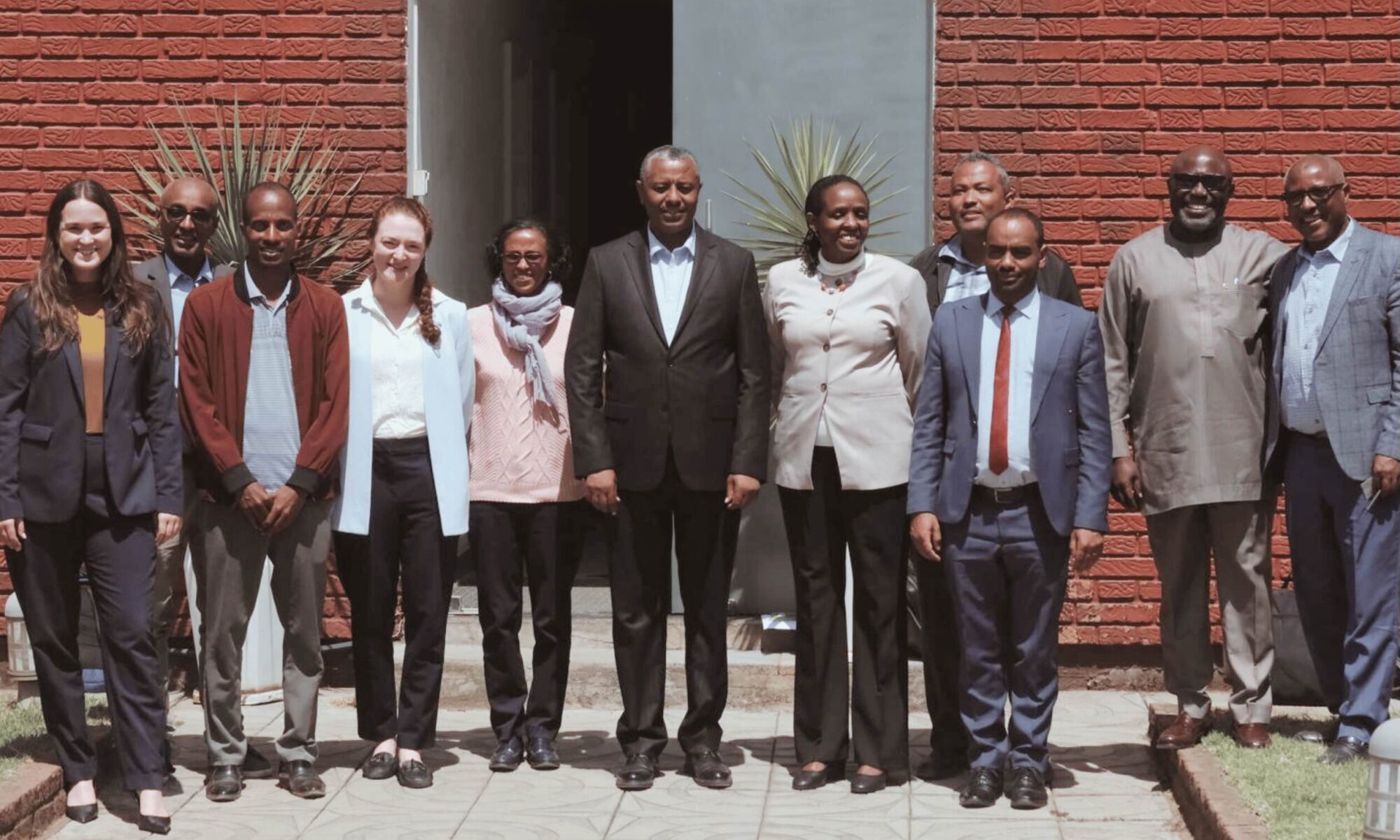
12 people of different nationalities pose for a photo

Addis Ababa, Ethiopia — February 6, 2026 — The Ethiopian Meteorological Institute (EMI) and the Ethiopian Agricultural Transformation Institute (ATI) have entered into new partnerships with the Agricultural Innovation Mechanism for Scale (AIM for Scale) to enhance the scale and impact of weather services for farmers through Ethiopia’s digital advisory ecosystem. Each Institute has signed a separate Letter of Agreement with AIM, formalizing their collaboration. 

Timely and actionable weather information is essential for farmer decision-making. By strengthening national digital advisory systems and integrating AI-based weather forecasting into government processes, the collaboration aims to ensure that reliable information reaches farmers at scale–improving productivity, reducing risk, and building long-term resilience across Ethiopia’s food system.

The collaboration was officially launched this week with a technical workshop on February 2, 2026 convening more than 30 government and technical partners to align on next steps for scaling weather advisories and alerts. The engagement continued on February 6 with a meeting hosted by EMI convening government officials from ATI and the Ministry of Agriculture to explore institutional alignment and coordination to scale these efforts in the lead-up to COP32, which will be held in Addis Ababa.

The Human-Centered Weather Forecasts (HCWF) Initiative at the University of Chicago has signed on as a partner under the EMI agreement, providing their expertise to support AI model benchmarking, operationalization, and capacity building. This work is supported by the Gates Foundation and complements global efforts to ensure farmers in low- and middle-income countries can benefit from cutting-edge technologies.

This multistakeholder collaboration is also driven by Precision Development (PxD), which is supporting the design and testing of farmer-centered advisory messages to enhance access and adoption. AIM for Scale, HCWF, and PxD previously partnered to support the Government of India’s Ministry of Agriculture and Farmers Welfare to reach 38 million farmers with AI-based weather forecasts during the 2025 monsoon season.

The initiative will also benefit from the expertise of the social enterprise Connect for Impact Advisory Group (C4Impact), founded by Agnes Kalibata, former Minister of Agriculture and Animal Resources of Rwanda and former President of the Alliance for a Green Revolution in Africa. C4Impact works with African governments and their partners to accelerate food system transformation in support of inclusive growth, resilience, and long-term food security.

Dr. Fetene Teshome, Director General of EMI, underscored the importance of strengthening the link between artificial intelligence and real-world applications: “Climate variability is projected to continue increasing. This is likely to result in more irregular onset and cessation of the rainy season, longer dry spells, and periods of excessive rainfall. As a result, farming systems and other sectors of the economy are becoming increasingly vulnerable. The role of climate information in minimizing risks and optimizing opportunities is therefore non-debatable. The Ethiopian Meteorological Institute is working with AIM for Scale and the University of Chicago to ensure that climate information leads to better, more actionable decisions, leveraging new AI tools.”

Dr. Firew Tegegne, Deputy Director General of ATI, noted that the agreement represents an important step in Ethiopia’s digital transformation agenda. “Our goal at ATI is to ensure that farmers across Ethiopia have reliable access to timely, relevant, and actionable information. This agreement strengthens our national systems and supports our efforts to scale advisory services that reach millions of farmers.”

Paul Winters, Executive Director of AIM for Scale and Professor at the University of Notre Dame’s Keough School of Global Affairs, highlighted Ethiopia’s leadership in adopting scalable digital solutions for agriculture. “We’ve seen the impact that digital advisory services can have in improving the lives of farmers. By integrating AI-powered tools and enhancing delivery channels, we can provide more accurate, tailored, and timely information to millions of farmers. AIM for Scale is honored to partner with ATI and EMI to support Ethiopia’s national priorities of strengthening its agriculture sector through technology and innovation.”

Together, these efforts position Ethiopia to build one of the most advanced digital advisory ecosystems on the continent—combining government leadership, cutting-edge research, strong development partnerships, and a commitment to delivering real value for farmers.

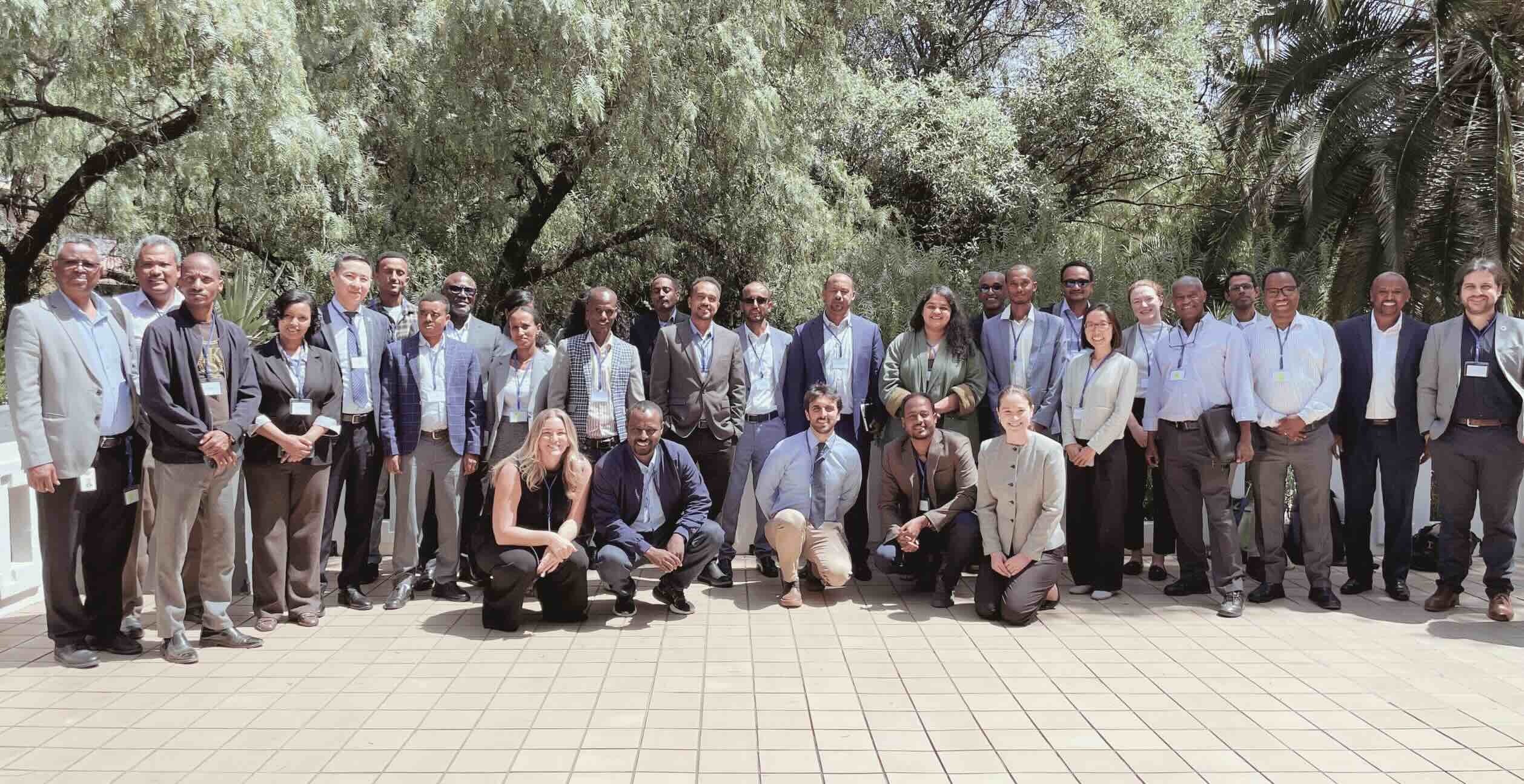
A large group of people pose for a photo
Government representatives and partners convened at the February 2 technical workshop to align on next steps for scaling weather advisories and alerts.

About the Partners

ATI 

The Ethiopian Agricultural Transformation Institute (ATI), formerly known as the Agricultural Transformation Agency (ATA), is a strategy and delivery-oriented government institute created to help accelerate the growth and transformation of Ethiopia’s agriculture sector, which is a key contributor to the country’s GDP, exports, and workforce. The ATI’s work is centered on improving the livelihoods of smallholder farmers (SHFs) across the country, for improved income, inclusiveness, resilience, and sustainability. The ATI has reached close to 5 million small holder farmers, delivered over 400 strategic studies, and implemented over 60 innovative projects.

EMI

The Ethiopian Meteorological Institute (EMI) was established as an autonomous government organization in 1980 under proclamation No 201/1980 and the institute has 11 regional meteorological service centers. The main roles and responsibilities of EMI are to provide weather, climate forecast and early warning services by collecting and analyzing meteorological information. The institute focuses on three strategic issues. These are to ensure meteorological data coverage, quality and access, providing accurate and reliable meteorological forecast and early warning advisory service and conducting research on climate research. The Ethiopian Meteorological Institute has established 1400 manned meteorological stations, 300 automatic weather stations, one radar, three upper air stations, 11 geonet cast stations, and 4kmx4km gridded datasets.

AIM for Scale

AIM for Scale is a global initiative supported by the International Affairs Office of the Presidential Court of the UAE and the Gates Foundation to scale evidence-based, cost-effective innovations that improve farmer livelihoods and food security in low- and middle-income countries. 

Building Climate Services That Work for Farmers: Coordinating Global, Regional, and National Action for Scaled Impact

Six people posing on stage at a COP30 event

On 19 November at COP30, AIM for Scale and the World Meteorological Organization (WMO) co-organized a panel discussion focused on the important interplay between global, regional, and national institutions in delivering timely, actionable weather and climate information to farmers. The discussion brought together:

  • Paul Winters, Executive Director, AIM for Scale (moderator)
  • Ousmane Ndiaye, Director-General, ACMAD
  • Albert Fischer, Director, WIGOS Division, WMO
  • Qingfeng Zhang, Senior Director for Agriculture, Food, Nature, and Rural Development Office, ADB
  • Ana Maria Loboguerrero, Director, Adaptive and Equitable Food Systems, Gates Foundation
  • Maja Schling, Senior Economist, IDB

Speakers emphasized that strengthening climate services for agriculture requires collaboration across the entire climate information ecosystem—from the global scientific standards set by WMO, to the regional coordination provided by ACMAD, to country-level implementation led by government and supported by AIM for Scale. Multilateral development banks (MDBs) play a central role in financing and embedding these systems sustainably, while donor partners such as the Gates Foundation are unlocking new investments in AI-powered data, benchmarking for accuracy, and last-mile delivery approaches that can ensure millions of farmers benefit.

People-Centered Climate Services

A core theme throughout the session was that the effectiveness of climate services depends on understanding and responding to farmers’ realities. Weather information only becomes valuable when it is:

  • delivered at the right time,
  • through the right channels,
  • in the right formats,
  • and aligned with the decisions farmers must make.

Speakers emphasized that messaging must be people-centered and grounded in human-centered design. The “last mile”—ensuring National Meteorological and Hydrological services (NMHSs) and agricultural extension systems can reach farmers with practical, local guidance—is where climate services succeed or fail. Trust is also essential: in many communities, weather understanding has been passed down for generations, and new tools take time—often multiple seasons—to gain acceptance. While emerging technologies such as artificial intelligence played a prominent role in the discussions, panelists underscored that technology on its own is insufficient. They stressed the importance of farmer engagement and co-production to ensure that services genuinely address farmers’ decision-making needs and help build lasting confidence and partnerships.

Connecting Global Models to Local Realities

Panelists underscored that no single institution can deliver farmer-relevant climate services alone. Instead, impact emerges when each level of the system plays its role:

Global Level (WMO)

WMO provides the backbone for climate and weather services through its global  standards for observation (WIGOS), its data-sharing infrastructure (WIS), and its global and regional data-processing system (WIPPS). These systems, along with WMO’s  scientific frameworks, support both traditional physics based forecasting and new AI-enabled tools. Close coordination with NMHSs ensures that programmes remain aligned with WMO priorities, member needs, and ongoing initiatives, particularly in advancing the use of climate services within the agriculture sector.

Regional Level (ACMAD)

ACMAD’s role in harmonizing regional knowledge, fostering data sharing, and connecting NMHSs across Africa is critical for scaling best practices across borders. As WMO’s designated Regional Climate Center for Africa, ACMAD serves as a key driver in advancing and supporting these collective efforts.

National Level (Governments with AIM for Scale Support)

In collaboration with partners like University of Chicago’s Human-Center Forecasts Initiative and Precision Development, AIM for Scale works directly with governments to embed innovations—such as AI-powered weather services—into national programs, strengthen institutions, and help countries deliver tailored guidance to farmers.

Speakers agreed that embedding AI within government systems, not in parallel structures, is essential for long-term sustainability.

Investing in Accuracy, Delivery, and Evidence

The Gates Foundation highlighted three key investment areas shaping the next generation of climate services:

  1. AI-powered and inclusive data systems to improve the precision and accessibility of forecasts.
  2. Rigorous benchmarking to evaluate real-world model performance across East and West Africa and ensure tools reflect local conditions.
  3. Innovations in dissemination, including A/B testing across SMS, voice, apps, radio, and intermediaries to understand what actually drives farmer behavior.

Panelists emphasized that impact evaluation is non-negotiable. Understanding whether farmers are using information—and how it affects their decisions—allows institutions to refine delivery approaches and build evidence for scale.

Strengthening Institutions and Policies for Scalable, Sustainable Systems

Several speakers addressed a persistent barrier: fragmentation within government systems. Meteorological agencies, agriculture ministries, digital transformation units, and extension networks often work in parallel, leading to gaps in data flow and inconsistent messaging.

To overcome this, the panel highlighted the need for:

  • Inter-ministerial coordination and shared standards
  • Clear data-sharing policies across government agencies
  • Consistent, reliable national forecasting systems and delivery infrastructure
  • Capacity strengthening for meteorological and agricultural institutions
  • Standardized forecasting methodologies to ensure consistent, actionable outputs

Better alignment among government actors is essential for scaling innovations to reach millions of farmers in an efficient and unified way.

Scaling What Works: A Shared Imperative

Across all institutions represented, there was consensus that scale matters. Reaching tens of thousands of farmers is not enough to meaningfully improve food security or climate resilience. AI-powered forecasts, integrated climate services, coproduction to ensure services respond to the real decision needs of farmers and innovative dissemination tools must reach millions—ideally hundreds of millions—to match the scale of the challenges ahead.

The COP30 discussion made clear that scaling is possible when:

  • Global scientific leadership
  • Regional coordination structures
  • National government implementation mechanisms
  • Sustainable financing from multilateral development banks
  • And catalytic donor support

are aligned toward a common goal.

Looking Ahead

As climate risks intensify, the need for timely, accurate, farmer-centered climate services will only grow. WMO, ACMAD, and AIM for Scale are committed to advancing this work—together with governments, multilateral development banks, research institutions, and donors—to ensure that the world’s farmers have the information they need to make informed decisions, adapt to a changing climate, and strengthen their livelihoods.

The path forward is clear: stronger coordination, smarter technology, more robust institutions, and a relentless focus on farmers. With these elements in place, climate services can move from isolated innovations to national programs capable of delivering impact at scale.

AIM for Scale Mobilizes Global Effort to Reach 100 Million Farmers With Digital Advisory Services by 2030

Nine people posing in front of COP30 Brasilia signage

Belém, Brazil. | 11 November, 2025 – At COP30, the Agricultural Innovation 

Mechanism for Scale (AIM for Scale) announced a joint ambition to reach 100 million farmers with digital advisory services by 2030. Supported by the International Affairs Office of the Presidential Court of the United Arab Emirates (UAE) and the Gates Foundation, the coalition brings together the Asian Development Bank, Inter-American Development Bank, and the Governments of Ethiopia and India, among others, under the stewardship of AIM for Scale. 

These efforts aim to deliver science-based insights–such as weather forecasts, pest advisories, or soil information–directly to farmers, improving decision-making, productivity, and climate resilience at scale. This milestone is tied to AIM for Scale’s new Innovation Package on Digital Advisory Services for Agriculture and builds on its previous Innovation Package on Weather Forecasts for Farmers, launched at COP29, which mobilized over $1 billion in commitments from multilateral development banks and partners to scale weather services for farmers. 

Her Excellency Mariam Almheiri, Chair of the International Affairs Office at the UAE Presidential Court, emphasized: “Around the world, millions of farmers face climate uncertainty every day. Turning that uncertainty into opportunity is what drives us. This is a testament to the UAE’s global role – not only in advancing innovative solutions, but in collaborating with global partners to adopt and scale them. AIM for Scale embodies this vision – bringing together governments, development banks, and partners to channel investment into solutions that can be deployed widely and sustainably, improving livelihoods and strengthening food systems around the world.”

Partner Highlights

As a key member of the AIM for Scale partnership, the Asian Development Bank is committed to helping 20 million farmers across the Asia and the Pacific region to access timely advisories backed by weather forecasts, as part of its commitment to help improve food production. Noelle O’Brien, Director of Climate Change at the Asian Development Bank, explained that “ADB is engaging in this partnership to promote the use of digital solutions as well as catalyze more investments into weather and climate information services to aid agriculture production.”

In Ethiopia, the Agricultural Transformation Institute (ATI) is partnering with AIM for Scale to provide tailored advisories to more than seven million farmers through the country’s trusted 8028 Hotline. Beginning in 2026, AIM for Scale will expand collaboration with multilateral development banks and governments in eleven additional countries across Africa, Asia, and Latin America to embed digital advisory services into national agricultural systems. Through these partnerships, AIM for Scale aims to reach 100 million farmers globally by 2030, enabling them to access timely, actionable information that supports more resilient and productive agricultural livelihoods.

Partners are already making significant progress toward this shared goal. In India, the Ministry of Agriculture and Farmers Welfare delivered AI-based monsoon onset forecasts via SMS to 38 million farmers earlier this year—the largest effort to date to provide targeted, AI-driven weather information. Monitoring surveys in two states showed near-universal interest in receiving future forecasts (97–98%), underscoring the high value farmers place on these services. 

“This program harnesses the revolution in AI-based weather forecasting to predict the arrival of continuous rains, empowering farmers to plan agricultural activities with greater confidence and manage risks,” noted Pramod Meherda, Additional Secretary at the Ministry of Agriculture and Farmers Welfare of India. “We look forward to continuing to improve this effort in future years.”

This milestone was made possible partly through a collaboration between the Human-Centered Weather Forecasts Initiative at the University of Chicago and Precision Development–supported by AIM for Scale–which helped advance the scientific foundation of the project and ensure that forecasts were communicated clearly and effectively. “These forecasts were successful in many ways, including by correctly predicting a pause in the northward progression of the monsoon,” noted Nobel Laureate Michael Kremer, co-Director of the Human-Centered Weather Forecasts Initiative and Chair of AIM for Scale’s Advisory Panel. “No other forecasts provided guidance to farmers on this unusual progression, especially with a two-to-four-week lead time. This illustrates how advances in AI weather forecasting can translate into practical, decision-relevant information for farmers–often delivered at very low cost.” 

To sustain these advances, partners launched the AIM for Scale AI Weather Forecasting for Agriculture Training Program in Abu Dhabi–a collaboration between the Mohamed bin Zayed University of Artificial Intelligence, the UAE National Center for Meteorology, and the University of Chicago. The program, supported by the International Affairs Office of the Presidential Court of the UAE, brought together meteorological and agricultural agencies from Bangladesh, Chile, Ethiopia, Kenya, and Nigeria for intensive, hands-on training in September 2025 and will expand to 25 additional countries by 2027.

“Our goal is simple,” said Paul Winters, Executive Director of AIM for Scale and Professor at the University of Notre Dame Keough School of Global Affairs. “Every farmer—regardless of where they live—should have access to the information they need to confidently make decisions that will strengthen their livelihoods. Reaching 100 million farmers is ambitious, but by working together and investing in scalable, evidence-based solutions, it’s within reach.”

Building on early commitments from the Asian Development Bank and the Government of Ethiopia, and continued progress in India, other partners are working closely with AIM for Scale to facilitate the scaling of digital advisory services, as well as design complementary initiatives to sustain long-term impact.

“By collaborating with partners like AIM for Scale, we can bring the best technical expertise to our region, adapt proven models to local contexts, and contribute lessons from Latin America and the Caribbean to global knowledge,” commented Morgan Doyle, General Manager of the Southern Cone Regional Country Department of the Inter-American Development Bank (IDB). “The IDB is committed to helping every country in the Americas turn innovation into inclusion—building food systems that are more productive, resilient, and adaptive. With the partnerships we forge here at COP30, we can ensure that digital agriculture reaches every corner of our region—so that by 2030, innovation truly impacts everyone.”

These efforts are reinforced by new strategic investments from the Gates Foundation, which are advancing forecast benchmarking across Africa to evaluate the real-world performance of AI models and ensure innovations deliver measurable value for farmers. “While these models have transformative potential, it is essential to evaluate them locally to ensure they appropriately represent local conditions for small-scale farmers, policy makers, and private enterprise use,” noted Neil Hausmann, Principal Officer at the Gates Foundation. 

The Gates Foundation investments in benchmarking will be channeled to AIM for Scale partner the Human-Centered Forecast Initiative at University of Chicago, co-directed by Amir Jina, Assistant Professor at the University of Chicago and Chair of the AIM for Scale Weather Forecasts for Farmers Technical Panel. “Last-mile delivery is where digital advisory services succeed or fail,” said Professor Jina, speaking from COP30. “We need to rigorously test what works for farmers in real conditions—how messages are delivered, understood, and acted upon. The more we learn from those interactions, the more effective and scalable digital systems become.”

The Economist Covers India Monsoon Forecast Project

In an article titled “AI models ace their predictions of India’s monsoon rains,” The Economist spotlights India’s pioneering use of artificial intelligence to forecast the monsoon—an initiative that delivered AI-powered rainfall predictions to 38 million farmers this year. The article highlights how machine learning is transforming one of the world’s most complex weather systems into actionable information for farmers. AIM for Scale provided catalytic support to scientific partners leading this work.

AIM for Scale’s Weather Forecast for Farmers Technical Panel member Pedram Hassanzadeh is quoted in the piece, emphasizing the potential for AI to “democratize weather forecasting” by reducing dependence on expensive supercomputers and data-intensive models.

Building on this success, AIM for Scale aims to extend farmer-centered weather forecasting to 11 additional countries by 2030.

Read the full article HERE.

AIM for Scale Leads Weather Forecasting Training Program Bringing the Power of AI To Low- and Middle-Income Countries

AIM for Scale, the Mohamed bin Zayed University of Artificial Intelligence, and the University of Chicago, have launched a first-of-its-kind weather forecast training program to help governments deliver tailored forecasts to meet local agricultural needs—including those of millions of farmers.

Just as climate change brings extreme and unpredictable weather to communities worldwide, advances in artificial intelligence (AI) are making it possible to predict these shifting conditions with greater speed, lower cost, and hyper-local precision. This breakthrough promises to extend accurate forecasting to regions that have historically lacked access to advanced technologies. Supported by the Agricultural Innovation Mechanism for Scale (AIM for Scale), a collaboration of researchers from the Mohamed bin Zayed University of Artificial Intelligence (MBZUAI) and the University of Chicago are working to ensure that governments in low- and middle-income countries (LMICs) can adopt these innovations early and build world class national services—delivering services once limited to places like the US, EU, or Japan.

“AI weather models are revolutionizing what can be done with forecasts, but because they are a new type of technology, governments often lack the training, hardware, and institutional capacity to build and use them effectively. If we don’t act, low- and middle-income countries risk being left behind,” says Pedram Hassanzadeh, associate professor in Geophysical Sciences at the University of Chicago and member of AIM for Scale’s Technical Panel on Weather Services for Farmers. “We’re working to ensure these countries can harness these innovations—taking cutting-edge AI and climate science from the lab to the field.”

The pioneering program–funded by a grant provided by the International Affairs Office at the Presidential Court of the United Arab Emirates (UAE)–is training staff from national meteorological and hydrological services (NMHS) and ministries of agriculture across low-and-middle-income countries on how to use AI weather forecasting models that are tailored to their specific needs. Their first cohort—from Bangladesh, Chile, Ethiopia, Kenya, and Nigeria—are being trained September 22-26 in the UAE, hosted by MBZUAI and the National Center of Meteorology. In the years ahead, additional rounds will expand to 25 more countries–reaching a total of 30 and further broadening reach and impact to potentially millions more farmers. AIM for Scale is working on the ground with development partners to ensure this effort is scalable, inclusive, and delivers real impact for farmers.

“Accurate, high-quality forecasts can unlock better yields, higher incomes, and stronger livelihoods for farmers,” says Paul Winters, Executive Director of AIM for Scale and Professor of Global Affairs at the University of Notre Dame’s Keough School of Global Affairs. “By pairing AI innovation with practical agricultural decision-making, we’re creating opportunities for millions of farmers to prosper.”

Fundamental to the program, the team is engaging ministries of agriculture to ensure forecasts can be tailored to the needs of smallholder farmers who are most vulnerable to weather risks. The power of AI is not only in extending access to the types of gold-standard forecasts available in the world’s most well-resourced NMHSs, but also in enabling those forecasts to be generated directly “in-house” by NMHSs at lower cost and with greater accuracy on timelines–from days to weeks—that matter most for farm management. For example, advanced knowledge of the start of the rainy season can help farmers plan what crops to plant and when. Equally important, however, are reliable short-term forecasts that guide day-to-day decisions about irrigation, fertilizer use, or labor. By partnering with ministries of agriculture, a feedback loop can be created: ministries help inform and guide model development to ensure forecasts meet needs on the ground, while improved forecasts in turn guide farmers to make more impactful decisions.

“From weather data to model verification and downscaling, this training covers the key dimensions of AI-powered weather forecasting that enable farmers to plan under uncertainty,” says Souhaib Ben Taieb, Associate Professor of Statistics and Data Science at MBZUAI. ”It demonstrates how frontier AI research can translate into practical solutions for global challenges like food security.”

The training combines technical expertise with hands-on capacity building, giving national meteorological teams the tools and autonomy to generate and deliver tailored forecasts and ensuring this information reaches farmers. Along with technical guidance and capacity building, the training solves another handicap: a lack of hardware. The program provides high-performance multi-GPU laptops to each participant so they can apply and sustain their training back in their home countries. With the right training and deployment, countries that once lagged behind can now match—and even surpass—the world’s leaders in forecast production.

Alongside AIM for Scale, MBZUAI, UChicago and, NCM, the partnership is convening experts from leading global institutions, including the World Meteorological Organization (WMO), Google DeepMind and Google Research, the European Centre for Medium-Range Weather Forecasts (ECMWF), AfriClimate AI, Norwegian Meteorological Institute, and Precision Development (PxD), among others.

“This training is a powerful example of how AI can be operationalized for the global good,” says Amir Jina, assistant professor at UChicago’s Harris School of Public Policy and Chair of AIM for Scale’s Technical Panel. “For the first time in history, there is a real prospect of democratizing access to world-leading forecasts, with low- and middle-income countries able to build national services that meet the same gold standard as the most advanced countries.”

AI Weather Training: Supporting Low- and Middle-Income Country Governments to Better Serve Farmers

In late September, AIM for Scale convened a first-of-its-kind AI Weather Forecasting for Agriculture Training Program in collaboration with the Mohamed bin Zayed University of Artificial Intelligence (MBZUAI) and the University of Chicago (UChicago), bringing together representatives from national meteorological and agricultural agencies from Bangladesh, Chile, Ethiopia, Kenya, and Nigeria. By supporting low- and middle-income country (LMIC) governments to build their capacity to generate and deliver AI-powered weather forecasts, this program marked a pivotal step toward sustainably reaching millions of farmers with timely information to guide critical decisions affecting their livelihoods. It also underscored the importance of ensuring LMIC governments can adopt these innovations early and develop world-class national services—capabilities once limited to places like the US, EU, or Japan.

As Amir Jina, Chair of AIM for Scale’s Weather Services for Farmers Technical Panel and assistant professor at UChicago’s Harris School of Public Policy noted: “For the first time in history, there is a real prospect of democratizing access to world-leading forecasts. Low- and middle-income countries can now build services that meet the same gold standard as the most advanced nations.”

Why AI Weather Forecasts Matter
For all farmers–but smallholder farmers in particular–weather represents a key risk that can make or break an agricultural season. Yet, in many LMICs, access to timely and accurate weather remains limited with traditional forecasting systems often out of reach to meteorological agencies due to their costs. AI is opening new possibilities: faster, more precise, and more affordable forecasts that can be tailored to local conditions and tailored to farmers’ needs.

“Before this program, I didn’t know what AI really was. Now I see how it can help us improve forecasts and support farmers to produce more,” said A.K.M. Nazmul Hoque from the Bangladesh Meteorological Department.

A First-of-Its-Kind Training
The five-day program was structured around both technical and applied tracks.

Meteorological service participants learned how to run and evaluate AI models, benchmark their accuracy, and integrate them alongside conventional forecasting systems.
Agriculture ministry participants focused on translating forecasts into actionable advice, ensuring that climate information reaches farmers through extension systems, mobile tools, and advisory platforms.
In addition to the program’s organizers, sessions were led by experts from leading global institutions, including the UAE National Center of Meteorology, the World Meteorological Organization, Google DeepMind and Google Research, the European Centre for Medium-Range Weather Forecasts, AfriClimate AI, Norwegian Meteorological Institute, Rhiza Research, and Precision Development (PxD), among others.

Each participant left not only with new skills but also with a high-performance laptop, enabling them to continue running AI models in their offices back home.

Learning From Each Other
One of the most powerful aspects of the program was the exchange of experiences across countries. Participants were able to see how peers were approaching common challenges—whether it was Bangladesh’s disaster protocols to quickly coordinate evacuation activities based on flood risk alerts, Kenya’s farmer registry and planting-window tools, or Chile’s work on risk platforms that combine climate and disaster data.

As Jose Abel Echeverria Morales of Chile’s Institute for Agricultural Development put it: “The surprising thing about this week was seeing how fast AI is advancing—and how it can help us get the right message to farmers at the right time. It was amazing to learn from countries that are so different from us, yet share the same vulnerabilities.”

The training closed with a session dedicated to creating a community of practice: a cross-country network where participants can continue sharing knowledge, comparing results, and supporting each other as they integrate AI forecasting into national systems. This collaborative spirit is at the heart of AIM for Scale’s vision—building not just stronger forecasts, but stronger institutions and partnerships that ensure those forecasts reach the farmers who need them most.

Looking Ahead
This inaugural cohort—funded through a grant from the International Affairs Office at the Presidential Court of the United Arab Emirates—marks the start of a multi-year journey. By 2027, AIM for Scale aims to train a total of 30 countries to operationalize AI weather forecasting, equipping national institutions to provide more reliable, farmer-focused forecasts. Together, these efforts could reach tens of millions of farmers, helping them manage weather-related risks more effectively, make informed decisions, and strengthen their livelihoods.