
AI for Agriculture
Harnessing AI to deliver scalable solutions for Farmers
This innovation area identifies where AI can deliver the greatest value for farmers and what it takes to scale responsibly.
Meet the AI for Agriculture Technical Panel
The AI for Agriculture Technical Panel is made up of subject matter experts, including academics who conduct research related to the topic, and implementers—multilateral development banks, non-governmental organizations, and foundations—who work to promote and fund the innovation in the field.

Assistant Professor of Information Technology at Wageningen University & Research
Ayalew Kassahun is an Assistant Professor at Wageningen University & Research where he teaches and works on topics that are at the boundaries of IT, supply chain management, agriculture, and food systems. His teaching and research activities include transparency and traceability in food systems, machine learning, business process modelling, IoT, software architecture, reference architecture, multi-organizational collaboration, and business-IT alignment. Before joining Wageningen University, Dr Kassahun was a software engineer at two leading software companies: InfoRay (now part of SDB Group) and Baan (currently Infor). Dr Kassahun has professional experience in diverse sectors as well as diverse educational backgrounds including civil engineering (BSc), hydrology (MSc), soil physics and agro-hydrology (MSc), knowledge systems (Ph.D.). In addition to his professional work, he participates in several voluntary, non-for-profit, and community activities.

Scientist at the International Center for Tropical Agriculture
David Guerena is an agricultural scientist with over 15 years of experience in soil carbon and fertility, plant nutrition, agronomy, geospatial analytics, and technology development across Africa, South Asia, and Latin America. Focusing on tropical smallholder farming systems, his research centers on frugal AI innovation to make advanced systems adaptable and deployable in the Global South. David leads applied research leveraging multimodal foundation models for computer vision on affordable smartphones, automatic speech models for indigenous African languages, and offline field-deployable small language models (SLMs) . Working in active research collaboration with Google and Meta, his efforts have been featured by Reuters, the BBC, and Astro Teller on the Moonshot podcast. He is based in Arusha, Tanzania.

Principal Scientist and Manager at Microsoft AI for Good Lab and Member of the UN Scientific Panel on AI
Girmaw Abebe Tadesse is Manager and Principal Scientist at Microsoft’s AI for Good Lab, where he leads the co-development of AI solutions with governments, UN agencies, academia, and non-profits across climate resilience, food security, and public health. He currently co-leads a large-scale AI-driven agriculture initiative built in close collaboration with local, regional, and global stakeholders. He recently launched ADAPT-Africa, a multi-stakeholder initiative that helps governments build and own pipelines for developing high-quality AI solutions for agriculture.
Girmaw was recently appointed to the UN Secretary-General’s Independent International Scientific Panel on AI. His research has appeared in leading scientific venues such as Nature, contributed to 24 international patent filings, and been featured by outlets including the BBC. Prior to Microsoft, Girmaw was a Staff Research Scientist at IBM Research Africa and a Postdoctoral Researcher at the University of Oxford. He holds a joint double doctorate from Queen Mary University of London, awarded through the Erasmus Mundus programme. Currently, He also serves on the Scientific Advisory Committee of the Wits MIND Institute in South Africa, is a Fellow of the Van Leer Foundation in the Netherlands and sits on Neuromatch’s Strategic Advisory Board in the United States.
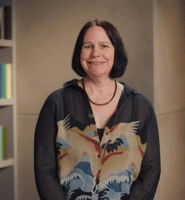
Director of Microsoft Research Africa
Jacki O’Neill is a computer scientist and lab director whose work sits at the intersection of technology, equity and the future of work. She is the founding director of Microsoft Research Africa, Nairobi (formerly MARI). She built the lab from the ground up into a globally recognised centre for equitable AI, with a focus on building human-centred AI – which is linguistically and culturally appropriate – in domains spanning the future of work, health, and agriculture across the African continent. She received the ACM SIGCHI Societal Impact Award (2026) and has spent her career conducting and leading research that centres the people most affected by technology: from gig workers and auto-rickshaw drivers to front-line workers and SMBs. Her research spans Kenya, South Africa, Nigeria, India, China, Europe and the USA. Her work has been cited over 4,200 times, recognised with multiple Best Paper awards, and has shaped products, including a remote troubleshooting system that won the Wall Street Journal Technology Innovation Award. Dr O’Neill has a rare ability to move between deep fieldwork and high-stakes technology design. She has presented her research to Satya Nadella, Bill Gates and Microsoft’s senior leadership team, led a landmark AI and Future of Work white paper with the African Union and Oxford University, and co-created PazaBench — the first speech-recognition leaderboard for African low-resource languages. With 50+ peer-reviewed publications, 13 patents, and a track record of building and mentoring research teams across India, Bangladesh, Europe and Africa, she is an influential voice in Human-Computer Interaction, working to ensure that the next generation of AI systems are built for everyone. Outside of work her passions include running, hiking and camping.

Director of Global Partnerships at One Acre Fund
John Mundy is the Director of Global Partnerships, Climate Finance and Technology at One Acre Fund, the world’s largest social enterprise supporting smallholder farmers across Africa. At One Acre, he leads efforts to connect farmers with climate finance and emerging technologies. Previously, John served as Strategy Director for WFP’s Farm to Market Alliance and as Director at Mercy Corps AgriFin, where he led digital agriculture platforms across East and West Africa, including Safaricom’s Digifarm. Earlier in his career he worked as a rural community organiser on the first Obama campaign, advanced ecological justice initiatives in the US with MacArthur award-winning pioneer Majora Carter, and co-founded a social enterprise in Peru linking voluntary carbon markets to remote communities. John holds an MA in Social Enterprise and a BA in International Development. He advises Producers Direct, serves on the ISF AgFinance State of the Sector advisory board and the FAO Technical Advisory Finance Committee, and holds fellowships with Acumen (2015) and Imagine (2026).
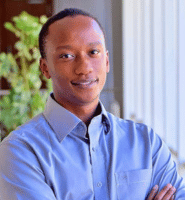
Principal Lead of AI for Agricultural Transformation at Strathmore University
Joseph Theuri Gitonga is the Lead for Data and Insights for Decision Support at Strathmore Agri-Food Innovation Center (SAFIC). He also designs and delivers practical AI-driven decision intelligence that improves agricultural policy, investment, and operational outcomes. Furthermore Joseph leads the shift from descriptive analytics to predictive, decision-grade insights by deploying high-impact use cases such as geographic investment prioritization, crop and enterprise viability analysis, market and price forecasting, and climate and shock response.

Senior Lecturer at the Department of Computer Science, School of Computing and Informatics Technology at Makerere University
Joyce Nakatumba-Nabende holds a PhD in Computer Science from Eindhoven University of Technology, The Netherlands, a Master of Science in Computer Science from Makerere University, Uganda and a Bachelor of Computer Science from Mbarara University of Science and Technology, Mbarara, Uganda. She is a senior lecturer in the Department of Computer Science, School of Computing and Informatics Technology, College of Computing and Information Sciences. She is the current head of the Makerere Artificial Lab under the department of Computer Science. Her major research interests are in the areas of Artificial Intelligence, Machine Learning, Natural Language processing and Business Process Management. She contributes to building the capacity of African data scientists and ensures diversity and gender equity in her research. Currently, she is a member of the Educational Advisory Committee of the Association for Computing Machinery, a board Member Data Science Africa, a member of the Responsible Artificial Intelligence (RAIN) Africa Network, a founding Member of the Open for Good Alliance Inclusive AI Commons with Localized Data by FAIR Forward and GIZ and a research scientist as part of the ARUA – The Guild Cluster of Research Excellence Addressing Global and African Challenges through Methods from Artificial Intelligence, Data Science and Theoretical and Computational Thinking.
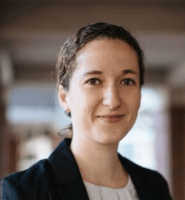
Assistant Professor of Economics at Instituto Tecnológico Autónomo de México (ITAM)
Raissa Fabregas is an Assistant Professor of Economics at Instituto Tecnológico Autónomo de México (ITAM). She is a development economist with broad interests in understanding barriers to human capital accumulation and learning in LMICs, as well as effective scaling of policy solutions. She is particularly interested in questions of external validity, barriers to scaling up programs, and the role of evidence in policymaking. Raissa’s research examines the role of information, incentives, and social factors in shaping individual behavior and economic opportunities. Her work includes studies on the effectiveness of digital agricultural interventions for smallholder farmers, the use of television to expand education in rural communities, and the economic impacts of increased access to mobile money. As part of this work, she has engaged in policy discussions on program implementation with private, public, and NGO partners in Puerto Rico, Mexico, India, Kenya, and other developing countries. Dr. Fabregas holds a PhD in Public Policy from Harvard University.
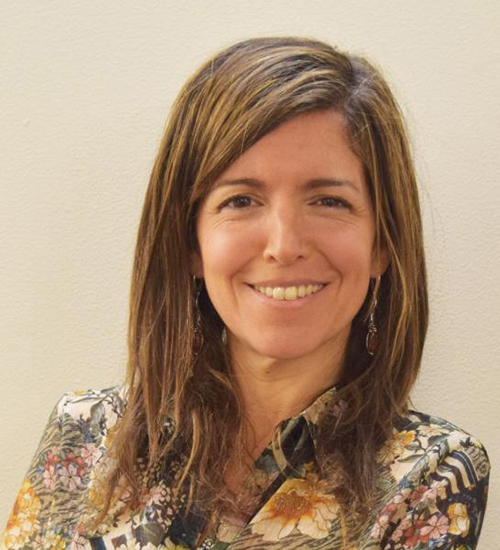
Senior Specialist in Rural Development at the Inter-American Development Bank (IDB)
Romina Ordonez is a Senior Specialist in Rural Development at the Inter-American Development Bank (IDB) based in Chile, where she leads the development and implementation of agriculture and rural development projects in Chile and other countries in Latin America. Her expertise spans the design, supervision, and evaluation of development projects, with a focus on sustainable rural development. Previously, Romina worked as an economist at IDB Invest, concentrating on the agribusiness and tourism sectors. Her work included measuring the development impact of private sector operations, designing and implementing advisory services and impact evaluations. She holds a Ph.D. in Agricultural Economics, a Master in Public Policy, a bachelor’s degree in Economics, and a technical degree in Journalism.
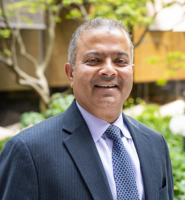
Global Lead for Data Driven Digital Agriculture and AgTech at the World Bank
Santoshkumar Vasudevan is the Global Lead for Data Driven Digital Agriculture and AgTech at the World Bank. Santosh has many years of experience in debt and equity across the globe in Manufacturing, Agribusiness and Services. He is responsible for devising and implementing the Bank’s AgTech strategy with a focus on supporting market innovations and technologies that have the potential to help all stakeholders in the Agricultural value chain

CEO & Founder of Gooey.AI
Sean is the CEO & Founder of Gooey.AI, a low-code AI orchestration platform for global impact. Gooey.AI’s mission is to help public sector organizations advance the UN Sustainability Goals through open-source AI solutions. Their clients include the Wellcome Trust, Rockefeller Foundation, Opportunity.org, City of Seattle, the UN Office of Migration and the Royal College of Arts. Previously, Sean founded Babajob.com – India’s largest job site for the aspiring labor with 8.5M users – which was acquired in 2017. Sean moved to Bangalore in 2004 as a founding member of Microsoft Research India and now lives in London with Archana Prasad and their son, Vyom.Sean is a TED Fellow, GES Entrepreneur, Unreasonable Goals Entrepreneur, AI Advisor to the Gates Foundation and recipient of the Namma Bengaluru award for Best Foreign Resident. He holds 29 patents and degrees in Computer Science and Public Policy from Brown University.

Senior Program Officer for Digital Agriculture Solutions at the Gates Foundation
Stewart Collis is the Senior Program Officer for Digital Agriculture Solutions at the Gates Foundation. With over 20 years of experience in agricultural information technology, he specializes in digital farmer services, smart farming, and digital agricultural ecosystems in low and middle-income countries in Africa and South Asia. Previously, Stewart was the co-founder and CTO at aWhere, and he contributed to climate-driven spatial crop simulation modeling and ag-data management tools at Texas A&M University and the International Center for Research in Agroforestry. Stewart holds a Masters of Engineering Science in Geomatic Engineering from the University of New South Wales, Sydney, Australia.
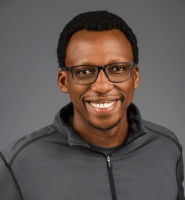
Product Lead at Google Research Africa
Tavonga Siyavora is the Product Lead at Google Research Africa where he drives product strategy and roadmap development for AI-driven applied research and initiatives. He’s a results-driven technologist, who leverages his experience from AgTech and complementary sectors to collaborate with partners and stakeholders, advancing the most impactful AI-powered solutions. His background spans hardware and software engineering, deal scoping, and leading cross-functional teams through delivery—bridging the gap between innovation and real-world impact. Tavonga is a proud product of Zimbabwe – he earned a BS in Mechanical Engineering from the University of Arizona and an ME in Systems Engineering from Iowa State University. Before Google (initially at X, the moonshot factory), he worked across precision ag product lines and geographies for John Deere. At Google Research Africa, his work now centers on impactful AI and digital initiatives across the African landscape, such as derisking food security and advancing language accessibility.

Donald B. Gillies Professor of Computer Science at the University of Illinois at Urbana-Champaign
Vikram Adve is the Donald B. Gillies Professor of Computer Science at the University of Illinois at Urbana-Champaign and a Professor in Electrical and Computer Engineering. He is a Co-founder and Co-Director of the Center for Digital Agriculture and leads AIFARMS, a $20M National Artificial Intelligence Research Institute funded by NIFA and NSF. Adve’s research interests lie in developing and using compiler techniques to improve the performance, programmability and reliability of computer systems. Adve and his Ph.D. student, Chris Lattner, co-designed the LLVM Compiler Infrastructure, which enables a novel approach to “lifelong compilation” of programs in a wide range of general-purpose programming languages. For example, most mobile apps for the iPhone, iPad, Apple Watch and Apple TV are shipped by developers to Apple in the LLVM compiler representation called “LLVM bitcode” and then compiled and specialized for the various end-user devices. LLVM is widely used in industry today, ranging from mobile devices (e.g., iOS and Android) to supercomputers (e.g., at NVIDIA, Cray, IBM and Intel) to data centers (e.g., at Google). Adve, Lattner and Evan Cheng received the ACM Software System Award in 2012 for co-developing LLVM. Adve has won a ten-year-retrospective Most Influential Paper award at CGO 2004, and distinguished paper awards at several conferences including PLDI 2005, SOSP 2007 and ICSE 2011. He has served as the Associate Editor for the ACM Transactions on Programming Languages and Systems, and co-chaired the Program Committees for ASPLOS 2010, VEE 2008, and LCPC 2007. One of Adve’s Ph.D. students, Robert Bocchino, won the 2010 ACM SIGPLAN Outstanding Dissertation Award and another student, John Criswell, won Honorable Mentions for both the 2014 ACM SIGOPS Dissertation Award and the 2014 ACM Doctoral Dissertation Award. Adve is a Fellow of the ACM and was named a University Scholar at the University of Illinois in 2015. He served as Interim Head of the Computer Science Department from 2017 to 2019.