
Integrated Solutions for Livestock Productivity
Delivering Better Inputs and Information to Livestock Farmers at Scale
AIM for Scale’s third Innovation Package, currently under development, centers on scaling improved inputs and evidence-backed information for livestock farmers, enabling better decisions on feeding, animal health, and herd management—and supporting higher productivity, stronger livelihoods, and improved food security at scale.
Meet the Integrated Solutions for Livestock Productivity Technical Panel
The Integrated Solutions for Livestock Productivity Technical Panel is made up of subject matter experts, including academics who conduct research related to the topic, and implementers—multilateral development banks, non-governmental organizations, and foundations—who work to promote and fund the innovation in the field.
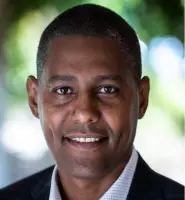
Associate Dean at the College of Agricultural and Environmental Sciences at the University of California, Davis
Ermias Kebreab is Associate Dean at the College of Agricultural and Environmental Sciences at the University of California, Davis. He holds the Sesnon Endowed Professorship in Sustainable Animal Agriculture. A global leader in climate-smart livestock systems, he has worked in more than 25 countries to advance sustainable agriculture through research, policy, and capacity building. He has contributed to the most recent Intergovernmental Panel on Climate Change (IPCC) guidelines on enteric methane emissions, chaired two expert committees for the UN Food and Agriculture Organization (FAO), and currently serves on the U.S. National Academies’ Board on Agriculture and Natural Resources. His pioneering research on livestock methane mitigation has shaped global policy and practice, earning recognition as a 2025 World Food Prize Top Agri-Food Pioneer and one of Business Insider’s Top 30 Global Climate Leaders (2023). He holds a Ph.D. in Ecological Modeling and an M.S. in Integrative Biology from the University of Reading, UK and B.S. in Biology from the University of Asmara, Eritrea.

Lead Global Technical Specialist (Livestock) at the International Fund for Agricultural Development (IFAD)
Anne Mottet is the Lead Global Technical Specialist (Livestock) at the International Fund for Agricultural Development (IFAD), both a specialized UN agency and an International Financing Institution. With an ongoing portfolio of nearly USD 1 billion in Sub-Saharan Africa, Central Asia and Latin America, she is responsible for ensuring the technical quality of investments, from design to implementation and completion, as well as resource mobilization, partnerships and knowledge management. She leads projects in Bolivia, Georgia, Kenya, Kyrgyzstan, Lesotho, Rwanda, Sierra Leone, Tanzania, Tajikistan, Uganda and Zambia. She also coordinates the cluster “Sustainable Production” in IFAD which includes the areas of Agronomy, Livestock, Fisheries and Aquaculture, Natural Resources and Land Tenure, and Water and Infrastructures. Before her current role, she served at Food and Agriculture Organization (FAO) in Rome, where she led technical assistance programs for livestock development and climate change adaptation and mitigation in over 15 countries across Sub-Saharan Africa, Central and South Asia, and Latin America. Her areas of expertise are: farming systems and modelling; agricultural economics, trade and policies; agrifood systems and the environment; climate Change mitigation and adaptation; agroecology; Policy assessments; quantitative and qualitative analysis; project design and management; experimental designs. She holds a Ph.D. in Agroecosystems from INP Toulouse and an M.Sc. in Agricultural Economics (Agricultural Development and Policies) from AgroParisTech. |
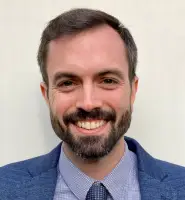
Agriculture Expert at the Climate & Clear Air Coalition
Gregory Kohler is an agriculture and climate policy expert specializing in methane mitigation, climate-smart agriculture, and rural development. He leads the Agriculture Hub at the Climate & Clean Air Coalition of the UN Environment Programme, where he guides a global portfolio of investments to reduce super pollutant emissions from livestock and rice systems. He works closely with governments, research institutions, and development partners to coordinate investments under the Global Methane Pledge and advance policy-relevant, scalable solutions. Prior to joining CCAC, he served as a Climate Change Advisor at USAID, where he helped design programs to reduce agricultural emissions, protect forests, and improve rural livelihoods across Latin America, Africa, and Southeast Asia. Trained in both business and anthropology, he holds a BBA from the University of Michigan and a Ph.D. in Anthropology from the University of California, Irvine, and brings an interdisciplinary perspective grounded in extensive field research with farming communities, agri-food institutions, and policymakers.
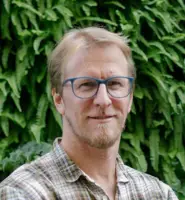
Program Director for Agriculture at Global Methane Hub (GMH)
Hayden Montgomery is the Program Director for Agriculture at Global Methane Hub (GMH). Prior to joining GMH, Hayden was the Special Representative of the Global Research Alliance on Agricultural Greenhouse Gases, representing its 65 member countries in all international forums and facilitating mitigation research between its members and partner organizations. From 2013 to 2016 he was New Zealand’s Ambassador to Argentina, Paraguay and Uruguay. Prior to these appointments Hayden gained considerable experience within the United Nations climate change process, representing New Zealand in agriculture, land use and forestry negotiations between 2006 and 2012. During this time (2010-2012) he was also based in the New Zealand Embassy in Paris where he represented New Zealand in other relevant processes and organizations including the OECD, UNEP and FAO, and spear-headed New Zealand’s international research cooperation on agricultural greenhouse gases. In addition to his international experience Hayden was involved in the development of New Zealand’s domestic agricultural climate change policy.
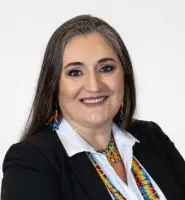
Senior Sector Specialist in the Agriculture and Rural Development Division of the Inter-American Development Bank (IDB)
Luisa Fernanda Lema Velez is a Senior Sector Specialist in the Agriculture and Rural Development Division of the Inter-American Development Bank (IDB). She has 20 years of experience in environmental policy, sustainable development, integrated conservation and development projects, sustainable tourism, and other related areas. Prior to joining the IDB, she advised and coordinated projects for various international organizations. Her professional background includes the United Nations Foundation, UNEP, Colombian NGOs and academia. She served as Secretary of the Environment for the Department of Antioquia, Colombia, her home region. She holds a degree in Forestry Engineering and Biology, a specialization in Environmental Law, and a Master’s degree in Environmental Management from Yale University.
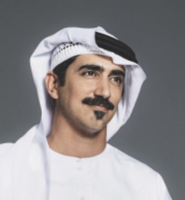
CEO & Founder of Soma Matter
Sheikh Dr. Majid Sultan Al Qassimi qualified as a Doctor of Veterinary Medicine at Saint Istvan University in Budapest, Hungary. He started his work as a veterinarian in the zoo and conservation field and moved into an administration role in 2013 when he became a director at the Environment Agency of Abu Dhabi, overseeing terrestrial biodiversity and conservation activities. From 2015 to 2021 he was the Chief Veterinary Officer of the UAE and an advisor to two ministers at the Ministry of Climate Change and Environment for all things food and agriculture.
Through his work as a policy maker, he focuses on food security, sustainability and biodiversity issues, supporting the UAE and Middle East more broadly in their approach to achieving a food production revolution in the region through technology, sustainable agriculture and traditional practices. He helped develop the Food Diversification Strategy for the UAE in collaboration with the Food and Agriculture Organization.
He is a founding partner at SOMA MATER where he develops food security and sustainability strategies and solutions for the private sector and governments. He also sits on the boards of multiple accreditation authorities, the UAE Food Safety Committee, and several food, animal, and agriculture boards.
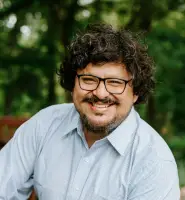
Professor in the Cornell CALS Department of Global Development, Director of Food Systems & Global Change
Mario Herrero is a professor in the Cornell CALS Department of Global Development, the director of Food Systems & Global Change, a Cornell Atkinson Scholar, and the Nancy and Peter Meinig Family Investigator in the Life Sciences. Currently, he is a Co-Chair of the Food Systems Countdown Initiative, Coordinating Lead Author of the IPBES Nexus Assessment, a Commissioner and Executive Committee member of the EAT-Lancet 2.0 study, serves on the Expert Panel on Livestock Methane, is a member of the steering group for the global True Cost of Food Coalition, and he serves on the executive committee of the Global Burden of Animal Diseases program. He works in the areas of food systems and the environment, climate mitigation and adaptation, livestock systems, true cost of food, sustainability metrics, and healthy and sustainable diets. In 2024, Herrero was elected to the National Academy of Sciences and is in the top 10 of Reuters list of most influential climate change scientists. Before joining Cornell, Herrero was Chief Scientist of Sustainability at Australia’s Commonwealth Scientific and Industrial Research Organization (CSIRO) and spent 13 years at the International Livestock Research Institute. He has held senior positions across major global initiatives, including the UN Food Systems Summit (Action Track 2), the IPCC Special Report on Climate Change, Food Security, and Land, and the IPCC 5th and 6th Assessment Reports. He has also served as a commissioner for the EAT-Lancet Commission on Sustainable Diets and The Lancet Commission on Obesity, and contributed to the World and Human Development Reports. He holds a PhD in Ecology and Natural Resource Management and MSc in Tropical Animal Production and Health from The University of Edinburgh and a BSc in Tropical Animal Production from Central American School of Animal Husbandry.

Natural Resources and Agriculture Economist at the Asian Development Bank (ADB)
Matthias Leitner is a Natural Resources and Agriculture Economist at the Asian Development Bank (ADB). Matthias focuses on project design and preparation for agri-business, value-chain and water resource projects. His particular interest lies in livestock, climate-smart agriculture, precision farming and ways to engage youth more meaningfully in the sector. Prior to joining ADB, Matthias worked for the UN Food and Agriculture Organization on Nutrition and the World Food Programme on private sector resource mobilization. Matthias has a background in finance and holds a Master of Science in International Business Administration from the European University Viadrina.
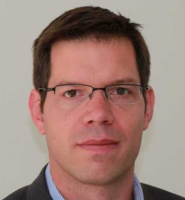
Deputy Director in the Agricultural Development program at the Gates Foundation
Dr. Nick Juleff is a Deputy Director in the Agricultural Development program at the Gates Foundation. He is focused on supporting farmers and governments in sub-Saharan Africa and South Asia for sustainable, inclusive agricultural transformation. Before his current tenure, Dr. Juleff was a Wellcome Trust Fellow, and has held various roles in academia, regulatory bodies, and the pharmaceutical industry. Dr. Juleff qualified as a veterinary surgeon in South Africa, holds a PhD from the University of Edinburgh, and is a Member of the Royal College of Veterinary Surgeons as well as a Fellow of the Royal Society of Biology.
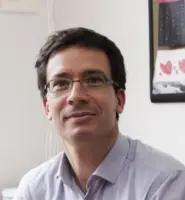
Professor in the Department of Animal Sciences at Wageningen University
Pierre Gerber is a Professor in the Department of Animal Sciences at Wageningen University. Pierre also holds a staff position at the World Bank Group, where he participates in a program aiming at mainstreaming sustainability considerations within the global portfolio of livestock operations. He also provides leadership for the livestock portfolio in Central Asia. This involves project design and supervision, analytical work, as well as the piloting of novel financing options in the sector. Pierre has 25 years of experience in the assessment and financing of sustainable food systems transformation, Agriculture policy dialogue and multi-stakeholder engagements. His research and educational activities within the Animal Production System Group at Wageningen University address global environmental sustainability issues in livestock systems. He holds a PhD in Agricultural Economics from ETH – Zürich and two MSc degrees, in Agronomy from Ecole Nationale Superieure d’Agronomie de Rennes and in Land planning & Environmental law from Université de Nantes.
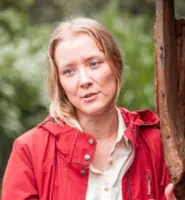
Veterinary Epidemiologist at the International Livestock Research Institute (ILRI)
Shauna Richards is a veterinary epidemiologist at the International Livestock Research Institute (ILRI). She has interests in the complex interplay of animal, human, and environmental health, and the relationship and impact this interplay has on zoonotic diseases and animal welfare. Shauna also has an interest in educational interventions related to the aforementioned topics. Previously she has worked on improving smallholder dairy productivity and welfare in Kenya, on rabies and One Health in Canada, and antimicrobial resistance in African animal trypanosomiasis at the wildlife livestock interface in Tanzania. Her current work focuses on improving adoption and awareness of One Health across Eastern and Southern Africa within the themes of research and innovation, governance, education, and implementation; and evaluating vaccination of livestock during humanitarian crises to determine its impact on livelihoods of livestock keepers. She holds a PhD in Veterinary Epidemiology, as well as a Doctorate of Veterinary Medicine degree, both from the University of Prince Edward Island.
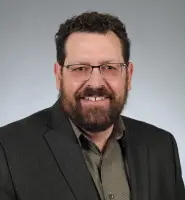
Professor in the Paul G. Allen School for Global Health and the School of Economic Sciences at Washington State University
Thomas Marsh is a Professor in the Paul G. Allen School for Global Health and the School of Economic Sciences at Washington State University. He is an economist with experience in observational and behavioral analyses, including topics on trade, willingness to pay for goods/services, and designing choice experiments in small and big data situations. He is a fellow of the AAAS, WAEA, and AAEA, as well as a member of the Washington State Academy of Sciences. Marsh is a founding member of the Global Burden of Animal Disease program, past president of the Western Agricultural Economics Association (WAEA), founding member and past chair of the Health Economics section of the Agricultural and Applied Economics Association (AAEA). His interests are quantitative economic assessments of disease events, interventions, and decisions across the world at the household or at more aggregate regional or country levels. Marsh has published over 110 peer reviewed articles, and has been the principal or co-investigator of more than 50 funded projects. He holds a PhD in Agricultural Economics and an MS in Statistics from Washington State University, an MS in Economics and Mathematics from Montana State University, and a BA in Mathematics from Carroll College. |
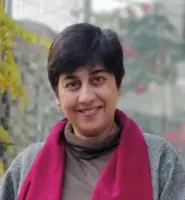
Chief Executive of the Aga Khan Foundation in India
Tinni Sawhney is currently the Chief Executive of the Aga Khan Foundation in India. She has over 35 years of experience on sustainable livelihood development in rural India and has worked extensively on issues of regenerative, climate resilient agriculture and livestock development for smallholder farmers. She has also worked on strengthening gender perspectives in development and building robust community institutions to lead development processes. Prior to her current role, she was the Head of Programs at AKF (India) leading and providing strategic direction to a diverse portfolio of programs across the sectors of agriculture, climate resilience, women’s economic empowerment, early childhood development, education, health, nutrition, water and sanitation. She has previously worked with FAO’s South Asia Pro Poor Livestock Policy Program, the Danish International Development Assistance (DANIDA) and the World Wide Fund for Nature. Much of Tinni’s education and learning has been from travels across the countryside – this has instilled in her a passion to work with rural communities, understanding the close bond they have with their land and livestock. Strengthening agriculture-livestock linkages for climate resilience, and center-staging the key role women play in the management and care of livestock, particularly small livestock, are key areas of interest.

Associate Dean for Global Programs at the School of Veterinary Medicine, University of California, Davis, and a Professor of Infectious Disease Epidemiology
Woutrina Smith is the Associate Dean for Global Programs at the School of Veterinary Medicine, University of California, Davis, and a Professor of Infectious Disease Epidemiology. She leads the multicampus UCGHI Center for Planetary Health and has been part of the UCD School of Veterinary Medicine’s One Health Institute since its inception. Smith has One Health research projects in Africa and Asia, as well as in California, where multidisciplinary teams work together to solve complex population and planetary health problems in innovative ways. Smith has received funding from diverse sources including the National Institutes of Health, the US Agency for International Development, the US Department of Defense, and the Gates Foundation to support her research and training endeavors. She holds a PhD, an MPVM and DVM from the University of California, Davis, and a BA from Pomona College.