
Government of Ethiopia Partners with AIM for Scale to Strengthen Digital Advisory Services, AI-based Weather Forecasts for Farmers at Scale

Addis Ababa, Ethiopia — February 6, 2026 — The Ethiopian Meteorological Institute (EMI) and the Ethiopian Agricultural Transformation Institute (ATI) have entered into new partnerships with the Agricultural Innovation Mechanism for Scale (AIM for Scale) to enhance the scale and impact of weather services for farmers through Ethiopia’s digital advisory ecosystem. Each Institute has signed a separate Letter of Agreement with AIM, formalizing their collaboration.
Timely and actionable weather information is essential for farmer decision-making. By strengthening national digital advisory systems and integrating AI-based weather forecasting into government processes, the collaboration aims to ensure that reliable information reaches farmers at scale–improving productivity, reducing risk, and building long-term resilience across Ethiopia’s food system.
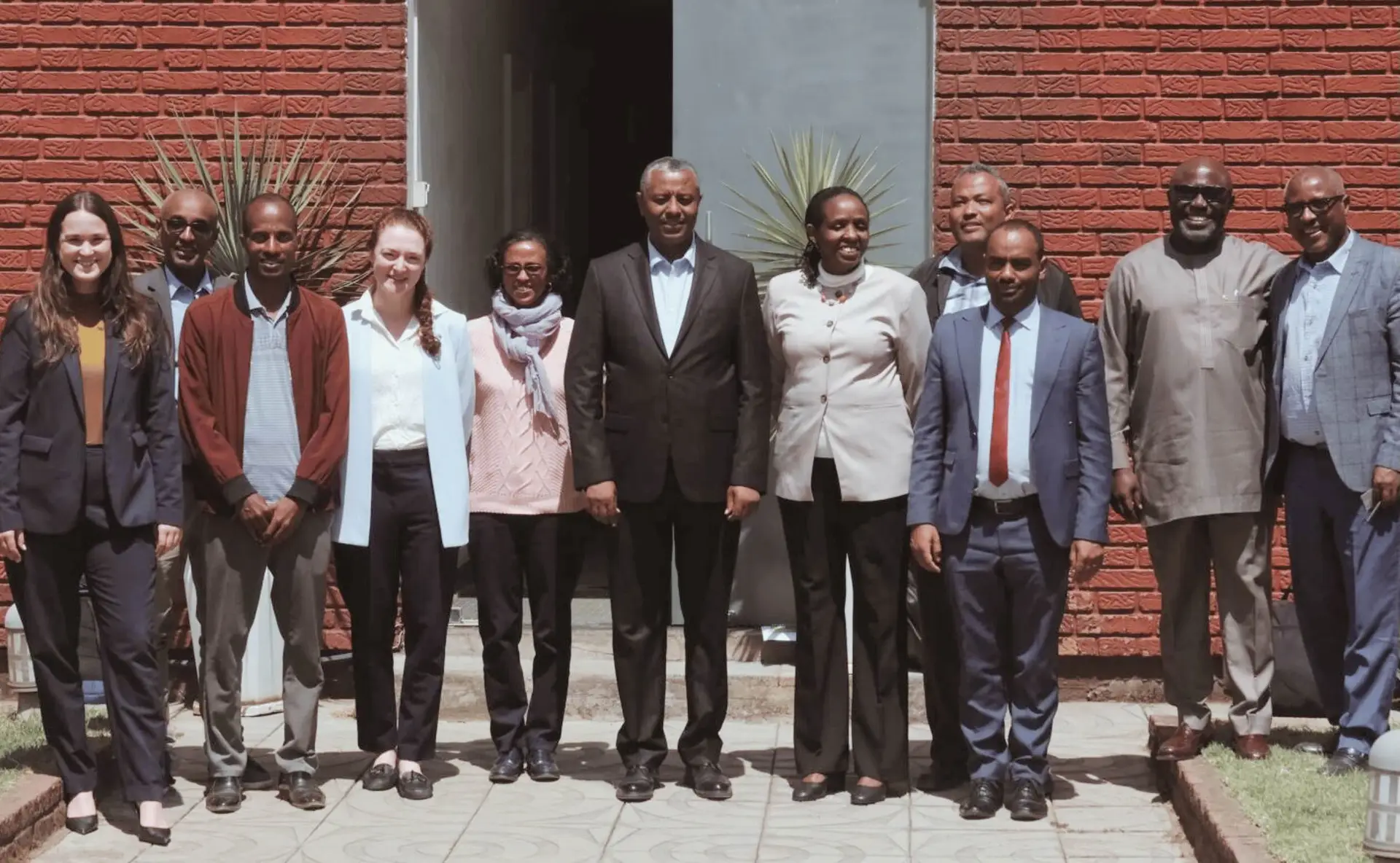
The collaboration was officially launched this week with a technical workshop on February 2, 2026 convening more than 30 government and technical partners to align on next steps for scaling weather advisories and alerts. The engagement continued on February 6 with a meeting hosted by EMI convening government officials from ATI and the Ministry of Agriculture to explore institutional alignment and coordination to scale these efforts in the lead-up to COP32, which will be held in Addis Ababa.
The Human-Centered Weather Forecasts (HCWF) Initiative at the University of Chicago has signed on as a partner under the EMI agreement, providing their expertise to support AI model benchmarking, operationalization, and capacity building. This work is supported by the Gates Foundation and complements global efforts to ensure farmers in low- and middle-income countries can benefit from cutting-edge technologies.
This multistakeholder collaboration is also driven by Precision Development (PxD), which is supporting the design and testing of farmer-centered advisory messages to enhance access and adoption. AIM for Scale, HCWF, and PxD previously partnered to support the Government of India’s Ministry of Agriculture and Farmers Welfare to reach 38 million farmers with AI-based weather forecasts during the 2025 monsoon season.
The initiative will also benefit from the expertise of the social enterprise Connect for Impact Advisory Group (C4Impact), founded by Agnes Kalibata, former Minister of Agriculture and Animal Resources of Rwanda and former President of the Alliance for a Green Revolution in Africa. C4Impact works with African governments and their partners to accelerate food system transformation in support of inclusive growth, resilience, and long-term food security.
Dr. Fetene Teshome, Director General of EMI, underscored the importance of strengthening the link between artificial intelligence and real-world applications: “Climate variability is projected to continue increasing. This is likely to result in more irregular onset and cessation of the rainy season, longer dry spells, and periods of excessive rainfall. As a result, farming systems and other sectors of the economy are becoming increasingly vulnerable. The role of climate information in minimizing risks and optimizing opportunities is therefore non-debatable. The Ethiopian Meteorological Institute is working with AIM for Scale and the University of Chicago to ensure that climate information leads to better, more actionable decisions, leveraging new AI tools.”
Dr. Firew Tegegne, Deputy Director General of ATI, noted that the agreement represents an important step in Ethiopia’s digital transformation agenda. “Our goal at ATI is to ensure that farmers across Ethiopia have reliable access to timely, relevant, and actionable information. This agreement strengthens our national systems and supports our efforts to scale advisory services that reach millions of farmers.”
Paul Winters, Executive Director of AIM for Scale and Professor at the University of Notre Dame’s Keough School of Global Affairs, highlighted Ethiopia’s leadership in adopting scalable digital solutions for agriculture. “We’ve seen the impact that digital advisory services can have in improving the lives of farmers. By integrating AI-powered tools and enhancing delivery channels, we can provide more accurate, tailored, and timely information to millions of farmers. AIM for Scale is honored to partner with ATI and EMI to support Ethiopia’s national priorities of strengthening its agriculture sector through technology and innovation.”
Together, these efforts position Ethiopia to build one of the most advanced digital advisory ecosystems on the continent—combining government leadership, cutting-edge research, strong development partnerships, and a commitment to delivering real value for farmers.
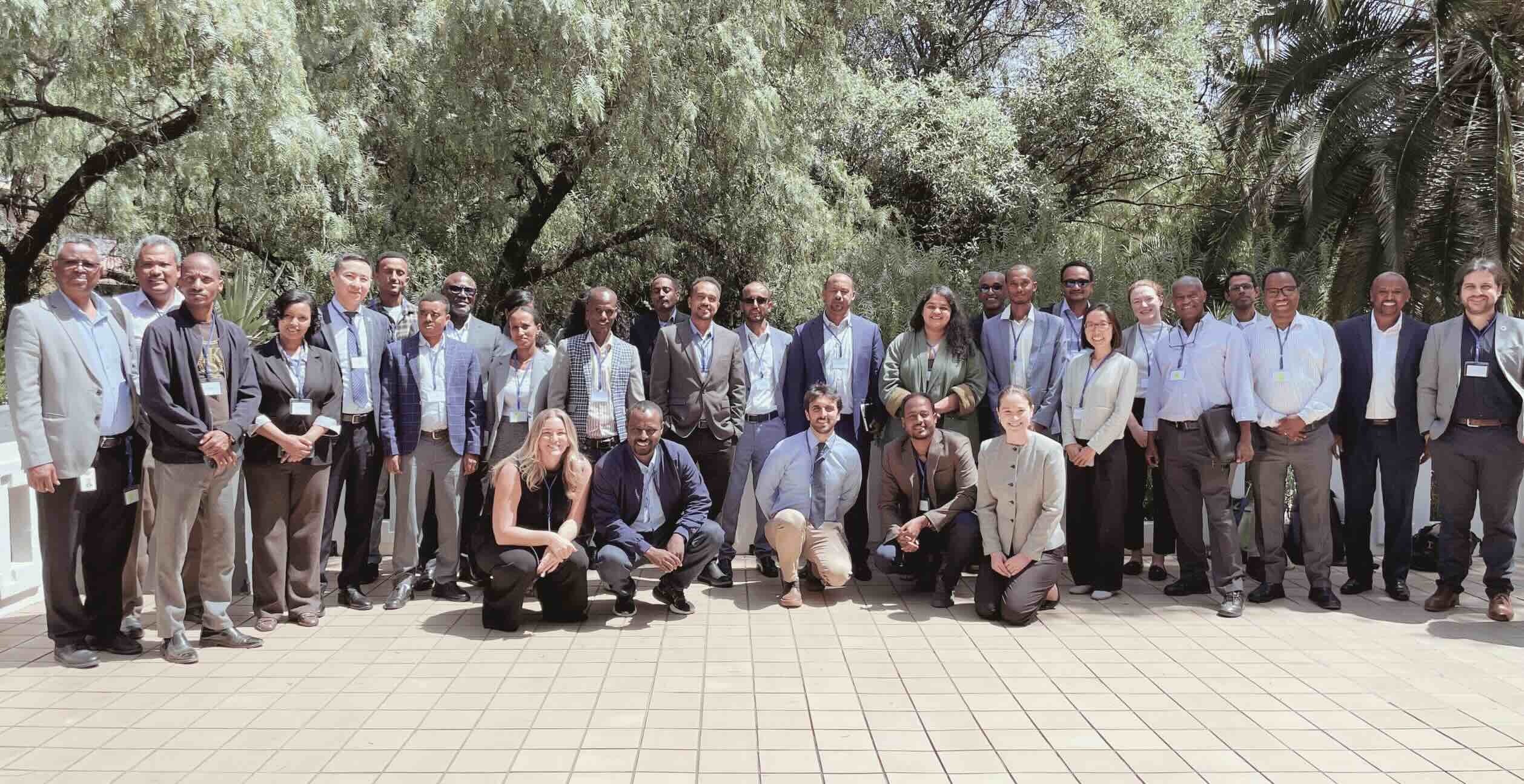
Government representatives and partners convened at the February 2 technical workshop to align on next steps for scaling weather advisories and alerts.
About the Partners
ATI
The Ethiopian Agricultural Transformation Institute (ATI), formerly known as the Agricultural Transformation Agency (ATA), is a strategy and delivery-oriented government institute created to help accelerate the growth and transformation of Ethiopia’s agriculture sector, which is a key contributor to the country’s GDP, exports, and workforce. The ATI’s work is centered on improving the livelihoods of smallholder farmers (SHFs) across the country, for improved income, inclusiveness, resilience, and sustainability. The ATI has reached close to 5 million small holder farmers, delivered over 400 strategic studies, and implemented over 60 innovative projects.
EMI
The Ethiopian Meteorological Institute (EMI) was established as an autonomous government organization in 1980 under proclamation No 201/1980 and the institute has 11 regional meteorological service centers. The main roles and responsibilities of EMI are to provide weather, climate forecast and early warning services by collecting and analyzing meteorological information. The institute focuses on three strategic issues. These are to ensure meteorological data coverage, quality and access, providing accurate and reliable meteorological forecast and early warning advisory service and conducting research on climate research. The Ethiopian Meteorological Institute has established 1400 manned meteorological stations, 300 automatic weather stations, one radar, three upper air stations, 11 geonet cast stations, and 4kmx4km gridded datasets.
AIM for Scale
AIM for Scale is a global initiative supported by the International Affairs Office of the Presidential Court of the UAE and the Gates Foundation to scale evidence-based, cost-effective innovations that improve farmer livelihoods and food security in low- and middle-income countries.